


 English
 中文简体
中文简体 Español
 日本語
日本語Submit feedback
 Home / News / Industry News / Key Characteristics of Brocade Fabric: Properties, Types, and Modern Uses
Industry News
Key Characteristics of Brocade Fabric: Properties, Types, and Modern Uses
2026-09-24
Brocade fabric is one of the most recognizable decorative textiles in the apparel industry. In its original form, the term referred to shuttle-woven cloth with raised jacquard patterns, usually made from silk and sometimes enriched with gold or silver thread. In modern production, the same word also describes warp-knitted and circular-knit fabrics that combine the ornamental look of brocade with the elastic performance of technical knitwear. For fabric buyers, product developers, and garment designers, the characteristics of brocade fabric matter because the name no longer guarantees a single set of properties. One brocade may be suited to upholstery, while another works naturally in swimwear or activewear. This guide examines the physical, structural, and functional characteristics of brocade fabric, explains how fiber choice changes the way it behaves, and helps buyers identify the right version for a specific garment category. The goal is to move past names and marketing descriptions toward measurable characteristics such as stretch recovery, pattern definition, and dimensional stability.
Core Physical Characteristics of Brocade Fabric
All brocade fabrics share a visual language: a base structure with a clearly defined pattern created during the weaving or knitting process. Yet within that family, the physical properties vary considerably depending on construction.
- Raised surface relief. The defining trait of brocade is the contrast between pattern yarns and the ground structure. Woven brocade uses floating weft yarns that sit above the base weave and create a genuine embossed effect. Warp-knitted brocade produces a similar relief through selective loop transfer, giving the surface a dense textured area around the motif.
- Pattern durability. Because brocade patterns are constructed rather than printed, the design cannot fade or wash off. This is a critical characteristic for garments that are laundered frequently.
- Luster and color depth. Traditional silk brocade reflects light with a deep, changing sheen. Synthetic brocade reproduces the effect by combining bright polyester or nylon yarns with matte or semi-dull ground yarns, creating a restrained shine suitable for professional sportswear.
- Weight and compactness. Most brocade fabrics feel denser than standard jersey. Weight typically falls between 160 and 320 GSM, giving the material a structured drape that holds its shape instead of clinging to the body.
- Breathability control. Dense traditional brocade restricts air movement, which is acceptable for evening wear but not for active garments. Knit and mesh brocade constructions overcome this by using open-loop areas inside the pattern.
20 to 60 percentTypical elongation range of elastic knit brocade
160 to 320 GSMCommon weight range across brocade constructions
4-way stretchAvailable in warp-knitted elastic brocade
These characteristics explain why brocade is equally common in formalwear and in performance apparel. The decisive factor is not the pattern itself but the structural system that carries it.
How Fiber Composition Alters Brocade Fabric Characteristics
The characteristics of brocade fabric change dramatically with fiber content. The same jacquard motif can feel stiff and glossy in one fiber and soft and matte in another. A woven silk brocade and a knitted nylon-spandex brocade may share the same name in a product catalog, yet their behavior in cutting, sewing, and wearing is completely different. Buyers should therefore treat pattern construction and fiber composition as two independent selection criteria.
| Fiber type | Imparted characteristic | Typical application |
|---|---|---|
| Silk | High luster, soft hand, elegant drape | Formalwear, scarves, interior decoration |
| Cotton or viscose | Breathability, moisture absorption, matte surface | Shirts, lightweight dresses, home textiles |
| Polyester | Strength, color fastness, wrinkle resistance, fast drying | Sportswear, casual outerwear, fast fashion |
| Nylon with spandex | Elasticity, abrasion resistance, shape retention | Swimwear, activewear, fitted tops |
| Polyester with PBT, T400, or Sorona | Mechanical stretch without spandex sensitivity | Trousers, jackets, daily knitwear |
| Metallic thread | Decorative brilliance, increased stiffness | Festive and ceremonial garments |
Spandex content is the most important single number in an elastic brocade specification. Fabrics with 15 to 25 percent spandex deliver firm recovery and work well for swimwear and shapewear. Fabrics with 5 to 10 percent spandex feel more relaxed and are used for T-shirts, blouses, and light outerwear. PBT, T400, and Sorona yarns provide a quieter mechanical stretch that suits pants and jackets where a soft hand is required.
Structural Characteristics: Woven Brocade Versus Warp-Knitted Elastic Brocade
Production route remains the most reliable predictor of brocade behavior. The same pattern can be woven on a jacquard loom or knitted on a warp-knitting machine, and the resulting materials will have little in common beyond their appearance.
Woven brocade
Woven brocade is produced on jacquard looms, with pattern weft yarns floating on the face of the cloth and trimmed on the reverse. The structure is dimensionally stable, keeps sharp pattern edges, and supports metallic yarns without difficulty. These advantages come with trade-offs: essentially no stretch, floating yarns that can snag, and frayed edges that complicate sewing. Woven brocade is therefore chosen for jackets, evening gowns, and upholstery, where visual impact matters more than freedom of movement.
Warp-knitted and circular-knit brocade
Warp-knitted jacquard fabric made from nylon, polyester, and spandex keeps the raised ornamental pattern while adding four-way elasticity. Interlocked loops make the fabric run-resistant at cut edges, so garments can be assembled quickly and reliably. Pattern areas can be engineered with mesh openings to improve airflow, and the same construction can be adapted to yoga tops, polo shirts, and fitted dresses. The versatility of knitted elastic fabric has made this the standard route for garment manufacturers who want brocade aesthetics without the technical limits of woven cloth.
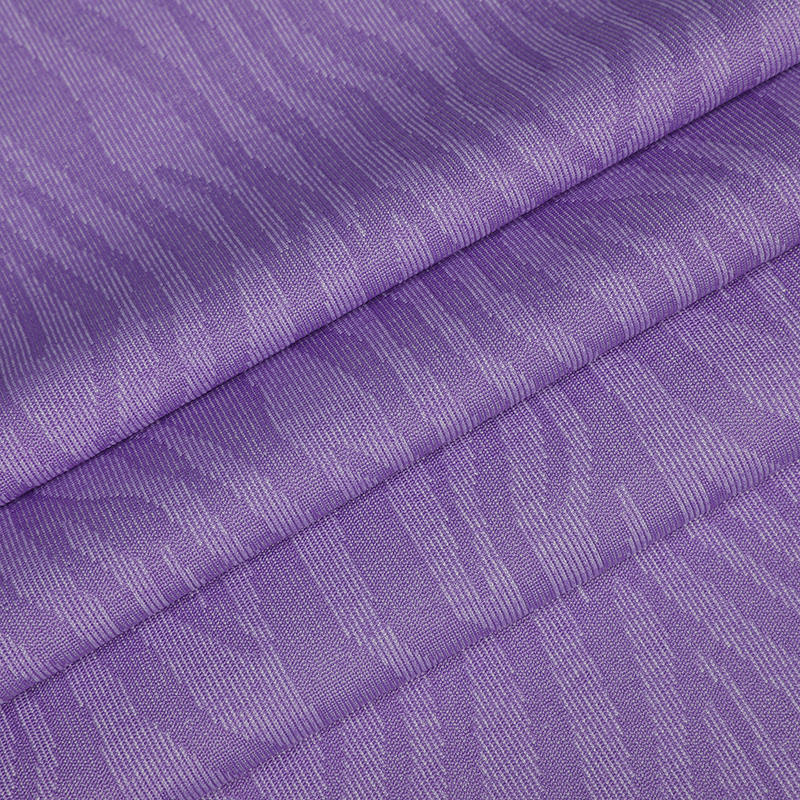
 APJ1018 Warp Knitted Jacquard Fabric with 5A Antibacterial FinishThis warp-knitted jacquard fabric combines a raised pattern with four-way elasticity and mesh options, while its 5A antibacterial treatment makes it suitable for activewear, casual wear, and home textiles.View Product →
| Property | Woven brocade | Warp-knitted elastic brocade |
|---|---|---|
| Stretch | Minimal | Four-way, typically 20 to 60 percent elongation |
| Pattern relief | Pronounced | Visible but lower profile |
| Edge behavior | Frays easily | Run-resistant |
| Breathability | Dependent on yarn density | Good, especially with mesh elements |
| Comfort in motion | Low | High |
| Typical end use | Upholstery, occasionwear, structured jackets | Swimwear, activewear, casual tops and pants |
How to Evaluate Brocade Fabric Characteristics Before Ordering
Evaluating brocade for a production program requires more than a visual check. The following checklist helps purchasing teams compare samples on the characteristics that truly affect garment performance.
- Measure stretch recovery in both directions. Mark a 10 cm square on the sample, stretch it to 50 percent elongation, hold for 30 seconds, release, and measure the remaining deformation. Recovery should exceed 90 percent for swimwear and activewear.
- Check pattern relief and floating yarn length. Excessively long floats snag during cutting and sewing, which leads to higher rejection rates on the production line.
- Run a domestic wash test. Wash three samples at 30 degrees Celsius, tumble dry one, line dry the second, and iron the third. Record changes to the pattern area, edge curling, and hand feel.
- Verify color fastness to light and perspiration, particularly for swimwear and outdoor garments where patterns face intense light and moisture.
- Confirm the finishing route in advance. Antibacterial, UV protection, or waterproof finishing should be decided before bulk production because each treatment changes the final characteristics of the fabric.
Buyers who combine these five checks with a careful review of the supplier's washing instructions will avoid most common production failures, from fabric shrinkage to pattern distortion after the first wash. Documentation matters as much as the physical sample, because the characteristics of brocade fabric are not static: they change with every finishing, dyeing, and heat-setting step.
Performance Characteristics of Brocade in Different Garment Categories
The practical value of a brocade fabric is judged inside a finished garment. Each category of apparel demands a different balance of the same core characteristics: recovery, hand feel, moisture behavior, and surface durability.
Swimwear and underwear
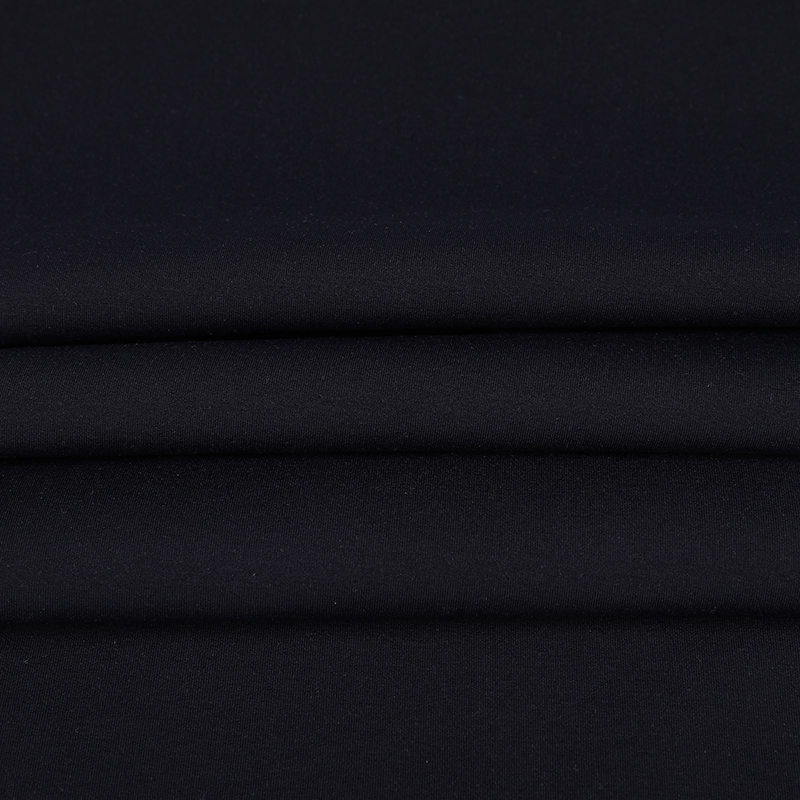
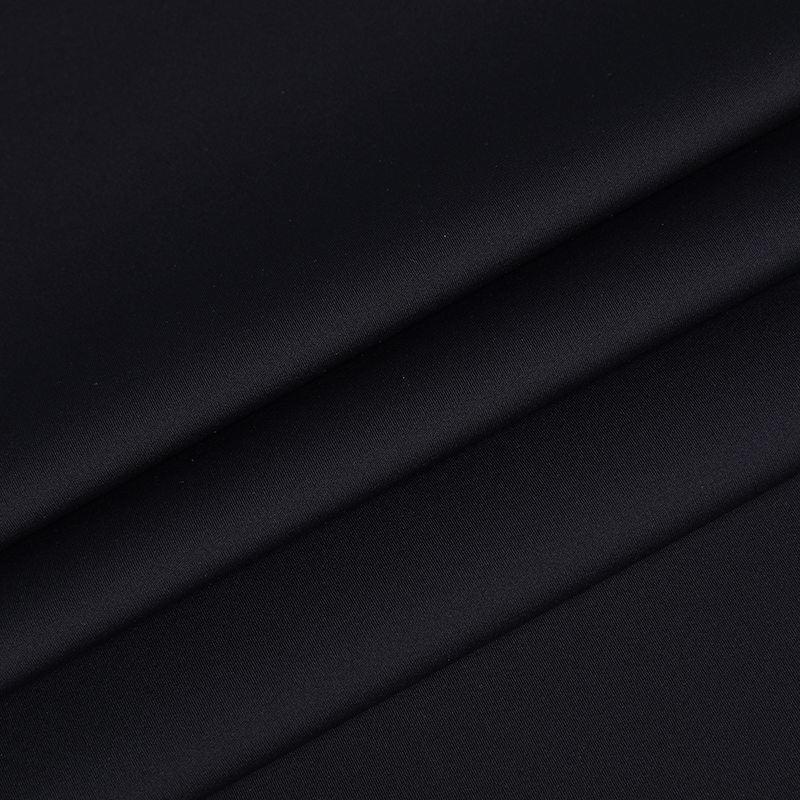
Swimwear brocade must hold a vivid pattern while surviving chlorine, sunscreen, and repeated stretching. High recovery is critical: after leaving the water, the fabric must return close to its original dimension. Matte nylon-spandex brocade with a weight of 180 to 220 GSM provides the required combination of surface opacity, quick drying, and elastic recovery for swimwear and underwear programs.
 APS0051 Matte Nylon-Spandex Brocade for Swimwear and UnderwearWith an 82/18 nylon-spandex ratio, this 190 GSM matte fabric offers quick-drying properties, high elasticity, and a low-glare surface, making it practical for swimwear and close-fitting underwear.View Product →
Sportswear and activewear
Activewear uses the decorative surface of brocade without sacrificing moisture transport. Warp-knitted jacquard mesh and small-check elastic knits create ventilation channels inside the pattern, pulling sweat away from the skin. The stretch axis is usually balanced so the fabric gives equally in length and width, providing the freedom required for training movements. Yoga garments further require a soft, skin-friendly reverse side and enough opacity for deep bending positions.
Casual clothing and fast fashion
Casual garments demand brocade that can be washed without special treatment. Mechanical stretch fabrics using PBT, T400, or Sorona first gained popularity in this segment because they offer soft stability and are less sensitive to heat than spandex. Fast fashion production also favors all-polyester jacquard and polar fleece versions of brocade, which reproduce the decorative look at a price suited to high-volume orders.
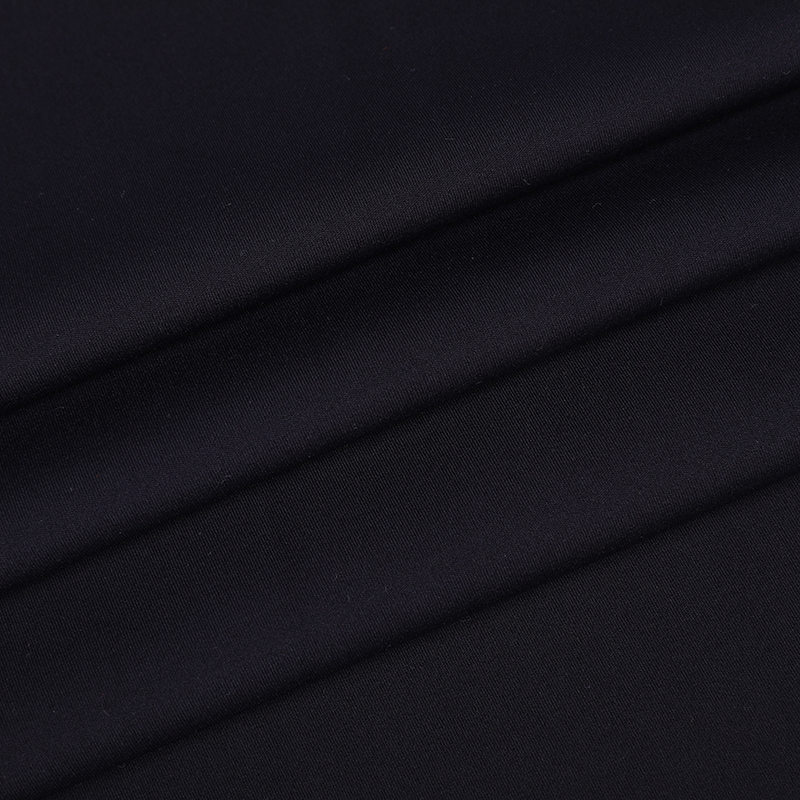
 CPS0997 High-Stretch Double-Sided Brocade for PantsFeaturing transverse and longitudinal stretch exceeding 300% and 200%, this nylon-spandex fabric offers quick recovery, antibacterial treatment, and moisture management, ideal for comfortable, wrinkle-resistant pants.View Product →
Elasticity and Functional Characteristics of Modern Brocade
Modern elastic brocade differs from woven brocade in one decisive way: the fabric is designed to move with the body and return to its original shape. Elasticity comes from two different sources.
- Spandex-based stretch. The fabric contains 5 to 25 percent spandex. Recovery is immediate and firm, making the fabric suitable for swimwear, shapewear, and fitted sports tops.
- Mechanical stretch. The fabric is knitted from PBT, T400, or Sorona yarns that behave like microscale springs. The stretch feels softer and produces less pressure on the body, which is why mechanical stretch is preferred for trousers, blazers, and everyday knitwear.
The recovery chart below shows representative values for elastic brocade systems after repeated stretching to 50 percent elongation.
When spandex content exceeds 15 percent, brocade recovery becomes firmer, but the fabric also becomes more sensitive to chlorine and heat. For poolwear, specify swimwear-grade spandex; for general activewear, a regular spandex grade can be used to control cost.
Beyond elasticity, brocade characteristics can be enhanced with functional finishes. Antibacterial treatment is common on jacquard knit tops for daily wear, UV protection is added to single-face brocade for summer jackets, and waterproof finishes are applied to warp-knitted mesh for outdoor garments. These finishes do not change the visual relief, but they change the garment categories for which the fabric qualifies.
How Care Requirements Reveal Brocade Fabric Characteristics
Care instructions are a direct reflection of fiber and construction. Silk brocade with metallic threads must be dry-cleaned or hand-washed in cold water, ironed on the reverse side, and stored flat to prevent tarnishing. Synthetic elastic brocade with spandex should be machine washed below 30 degrees Celsius, without bleach or high-heat tumbling. Mechanical stretch brocade made with PBT, T400, or Sorona tolerates conventional washing and is often chosen specifically to simplify aftercare.
For swimwear, immediate rinsing after pool use extends the life of spandex even when the fabric is chlorine-resistant. Every buyer should confirm care recommendations during the development phase and print them on the garment label. Many quality complaints in retail trace back to mismatched care instructions rather than to the fabric itself.
Frequently Asked Questions About Brocade Fabric Characteristics
Q1: Does brocade fabric stretch?
Traditional woven brocade has almost no stretch because the jacquard weave locks the yarns firmly in place. Warp-knitted and circular-knit elastic brocade, made with spandex or mechanical stretch yarns such as PBT and T400, typically stretches 20 to 60 percent and recovers completely when relaxed.
Q2: What is the difference between brocade and jacquard?
Jacquard is a weaving or knitting technology that creates complex patterns through controlled yarn placement. Brocade is a specific class of jacquard fabric distinguished by raised, relief-like pattern surfaces. Not every jacquard is a brocade, but every brocade relies on jacquard technology.
Q3: Is brocade suitable for sportswear?
Woven brocade is not suitable for activewear because it lacks stretch and mobility. Knitted brocade with jacquard patterns, mesh openings, spandex, or mechanical stretch yarns is widely used in golf polo shirts, training tops, and athletic trousers.
Q4: How should brocade garments be washed?
Silk brocade should be dry-cleaned. Polyester and nylon brocade with spandex should be machine washed cold on a gentle cycle and line dried. Mechanical stretch brocade can usually be washed under normal household conditions, which is one of its main commercial advantages.
CONTACT US
If you need a quote or have any questions, you can fill out the following form to contact us.

ABOUT
PRODUCT
CONTACT US
-
 West 3rd Floor, Building 5, Zone A, Hangpai Garment Industrial Park, Changan Town, Haining City, Jiaxing City, Zhejiang Province
-
 +886978217318
-
 [email protected]/[email protected]
Copyright © Haining Junrui Textile Co., Ltd. All Rights Reserved.
