


 English
 中文简体
中文简体 Español
 日本語
日本語Submit feedback
 Home / News / Industry News / How Is Brocade Fabric Made? The Complete Process from Yarn to Finished Pattern
Industry News
How Is Brocade Fabric Made? The Complete Process from Yarn to Finished Pattern
2026-10-01
Brocade fabric has long been associated with luxury dress and formal interiors. Its raised, richly patterned surface appears in bridal wear, banquet curtains, and heritage upholstery. Behind that ornamental face is a tightly controlled production sequence. How is brocade fabric made? The answer involves multiple yarn systems, a special type of loom, and finishing steps that protect the raised pattern. This article explains the technical process for buyers, product developers, and anyone who specifies decorative textiles. It covers raw material selection, yarn preparation, jacquard programming, weaving mechanics, finishing, and quality evaluation. It also compares classic woven brocade with modern jacquard knitted alternatives used in apparel.
What Defines Brocade Fabric?
Brocade is a woven textile in which an extra set of non-structural weft threads is inserted to create a raised pattern on the face of the cloth. Unlike printed or embroidered decoration, the design is formed during the weaving operation and becomes part of the fabric structure.
Three yarn systems are involved. The ground warp and ground weft form the base cloth, while a supplementary brocading weft is woven only into specific areas to build the pattern. Where the design requires a motif, the brocading weft floats across the surface. Where it does not, the weft is either carried across the reverse side as a long float or cut away. This supplementary float structure is what distinguishes brocade from ordinary jacquard.
- Raised relief pattern visible on the face of the fabric
- Floating threads visible on the reverse side
- Ground weave can be satin, twill, or plain
- Pattern contrast depends on yarn color and fiber luster
- Weight typically ranges from medium to heavy
The term brocade is sometimes misused in the market. A true brocade requires the supplementary weft system. A single-layer jacquard fabric with woven-in color patterns but no extra weft is not brocade, even if the design looks similar at a distance.
Key principle: the brocading weft is a non-structural yarn. It exists purely for decoration, so it can be floated, cut, or trimmed without weakening the ground cloth.
Which Raw Materials Are Used to Make Brocade?
The material choice determines the look, cost, and care behavior of the finished fabric. Historically, brocade was woven with silk warp and weft, supplemented with gold or silver wrapped threads. Today, most commercial brocade uses synthetic filaments because they can be woven at higher speed and dyed in sharp colors.
| Fiber | Key Characteristics | Typical Use |
|---|---|---|
| Silk | High luster, smooth hand, high cost | Bridal and ceremonial apparel |
| Cotton | Matte surface, breathable, lower cost | Upholstery and ethnic garments |
| Polyester | Colorfast, durable, low cost | Evening wear and home textiles |
| Nylon | Strong, good elastic recovery | Decorative trims and stretch brocades |
| Metallic | Reflective, stiff, delicate | Traditional zari and festive wear |
Yarn preparation also influences the final result. Brocade is normally yarn-dyed rather than piece-dyed. Because the pattern is created by colored threads lying on the surface, each yarn package is dyed before weaving. This allows precise color registration and prevents dye penetration from blending adjacent motifs. The yarn count and twist level are selected according to the desired relief. Coarser high-twist yarns create a more pronounced raised effect, while fine filaments give a smoother and flatter pattern.
Sustainability is entering this segment as well. Recycled polyester and bio-based filaments are now available for brocade ground weaves, reducing the environmental load of the base cloth while keeping the same weaving sequence. The brocading weft, however, is usually left in virgin material because its low quantity per meter does not justify the extra cost of recycled yarn.
How Brocade Fabric Is Made Step by Step
The complete production route contains five main stages. Each stage can be adjusted to change quality, price, and pattern complexity.
Step 1: Yarn Preparation and Dyeing
Select the warp and ground weft according to the base weave. For silk, degumming removes sericin and improves luster. For synthetics, heat setting controls shrinkage. Packages are wound onto cones, and the yarn is dyed in the chosen pattern colors. After dyeing, lubricants or sizes are added to reduce friction in the loom.
Step 2: Warping
The warp threads are transferred from individual packages to a single warp beam. The number of ends is calculated from the fabric width and warp density. A typical brocade may contain 80 to 140 warp ends per centimeter, depending on yarn fineness. The warp must be evenly tensioned so that pattern registration stays accurate across the full width of the cloth.
Step 3: Jacquard Programming and Loom Setup
Brocade is woven on jacquard looms, in which every warp end is controlled independently by a harness. The pattern design is first converted into a control file. Older machines used punched cards; modern electronic jacquards read digital files and change designs in minutes. The jacquard head selects which warp ends are lifted for each pick, while a separate mechanism controls the insertion of the brocading weft. Pattern repeat size is limited by the number of hooks in the harness and by the memory of the control system.
Step 4: Weaving the Brocade Structure
During weaving, the ground warp and ground weft form a base cloth in a satin, twill, or plain weave. The supplementary brocading weft is inserted by a secondary weft system. For continuous brocade, this weft runs across the full fabric width and appears on the reverse wherever the pattern is absent. For discontinuous brocade, it is inserted only across the motif area, producing a cleaner reverse side and avoiding wasted yarn. The weaving speed is slower than standard jacquard because the extra weft prolongs each cycle. A typical machine weaves between 30 and 80 picks per minute, and a single dress-length panel can take several hours to complete.
Step 5: Finishing and Inspection
After weaving, the fabric is inspected for broken floats and missing pattern ends. Loose floats are trimmed by hand or by a shearing machine. Singeing removes protruding fibers from the surface. Pressing or calendering sets the pattern and enhances luster. Some brocades are back-coated to improve dimensional stability. Final inspection checks width, weight per square meter, colorfastness, pattern repeat accuracy, and shrinkage.
Types of Brocade Fabric and Their Production Differences
The classification of brocade matters when specifying fabric, because each type follows a different manufacturing route and carries a different price.
| Type | Weaving Method | Profile | Typical Use |
|---|---|---|---|
| Continuous brocade | Supplementary weft across full width | Heavy, floats on back | Upholstery and jackets |
| Discontinuous brocade | Supplementary weft cut per motif | Clean back, high cost | Luxury apparel |
| Zari brocade | Metallic wrapped thread | Rigid, reflective, delicate | Ceremonial wear |
| Silk brocade | Silk warp and weft | High luster, soft hand | Bridal and formal dress |
| Synthetic brocade | Polyester or nylon yarns | Affordable, durable | Fast-fashion evening wear |
From a production planning viewpoint, the most important distinction is between continuous and discontinuous brocade. Continuous brocade is faster because the weft is never cut inside the fabric. The accumulated floats on the reverse make the cloth heavier and more prone to snagging. Discontinuous brocade consumes less brocading yarn, but it requires an additional cutting pass and careful finishing, which increases labor cost and production time. When a brand orders brocade for garment manufacturing, the choice between these two routes directly affects the unit price and the hand feel.
Pattern density is another planning factor. A large-scale floral motif requires more hooks and a wider jacquard repeat, which may reduce the number of simultaneously woven panels. Small geometric repeats allow more efficient use of the loom width and therefore lower unit cost. For this reason, many entry-price brocade collections are designed around repeat sizes of 15 to 40 centimeters.
Traditional Handloom versus Modern Machine Production
The same structural principle is used on hand-operated draw looms and on high-speed electronic jacquard machines, but the economics and quality profiles are very different.
| Factor | Traditional Handloom | Modern Machine Jacquard |
|---|---|---|
| Labor input | One weaver plus draw boy | One operator per several looms |
| Production speed | Less than 5 meters per day | Up to several hundred meters per day |
| Pattern repeat | Limited by draw cords | Nearly unlimited digital memory |
| Design change | Days of re-tying | Digital file swap in minutes |
| Tension control | Manual and irregular | Automated and uniform |
| Cost per meter | Very high | Moderate to low |
Modern production does not necessarily produce a better brocade; it produces a more consistent and economical one. For apparel use, machine-made polyester brocade offers acceptable drape and color at a fraction of the handloom price. However, the tactile density of handwoven silk brocade, where slight irregularities give the cloth a living surface, is difficult to replicate mechanically. Buyers should define the end use first, then choose the technology that fits the target price and quality band.
In practice, the two routes serve different order profiles. Handloom production suits limited-edition pieces, restoration projects, and high-end tailoring where authenticity justifies a long lead time and a premium price. Machine production suits ready-to-wear programs with tight deadlines and repeat orders, where pattern consistency and yield are more important than artisanal character.
Modern Alternatives: Brocade-Style Patterns in Warp-Knitted Fabrics
Classic brocade is woven, but the apparel industry increasingly wants patterned, relief-looking textiles with stretch and breathability for sportswear, swimwear, and casual tops. Warp-knitted jacquard machinery produces raised geometric and floral motifs using loop structures rather than a supplementary weft. These fabrics imitate the visual depth of brocade while adding elasticity, lighter weight, and moisture management.
For a swimwear or activewear collection, a warp-knitted jacquard fabric can deliver a brocade-like ornamental surface without the stiffness and snagging risk of woven floats. Product developers can choose open-mesh jacquards for ventilation, dense double-faced jacquards for compression, and antibacterial treated jacquards for all-day wear. The design vocabulary is similar, including small checks, diamonds, honeycombs, and trailing vines, but the material behavior belongs to the knitted category. A detailed process comparison of jacquard double-beaded stretch fabric shows how the same yarn set can produce very different surface depth and stretch behavior.
The following warp-knitted jacquard options are examples that replace woven brocade effects in apparel:
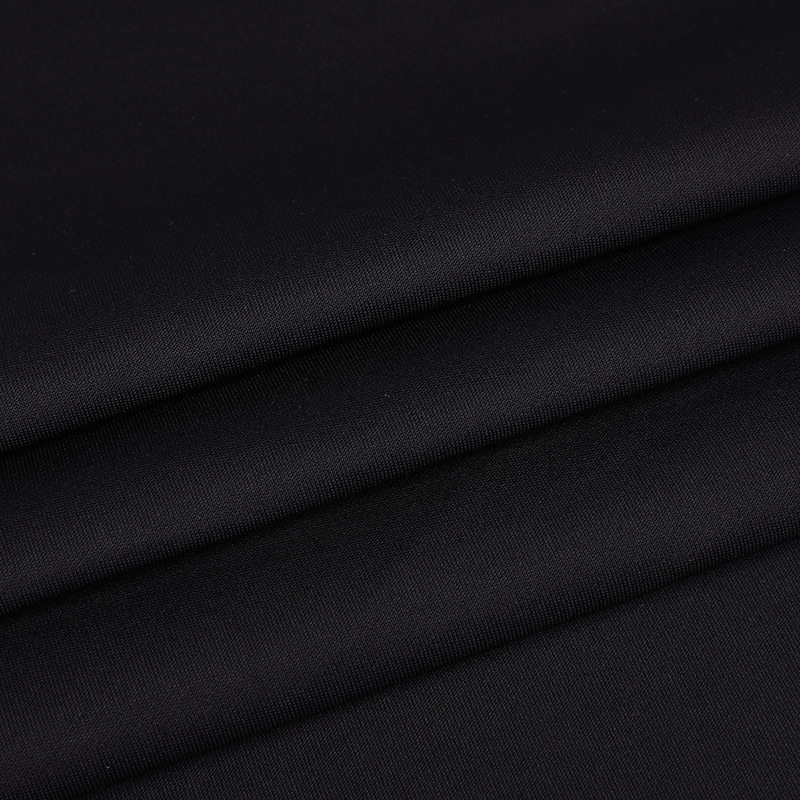
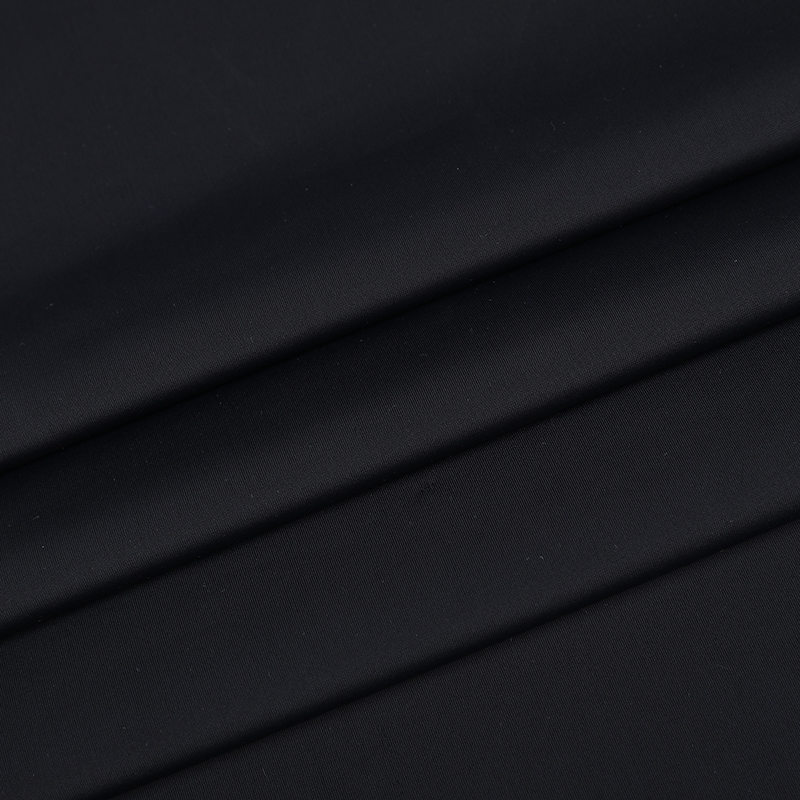
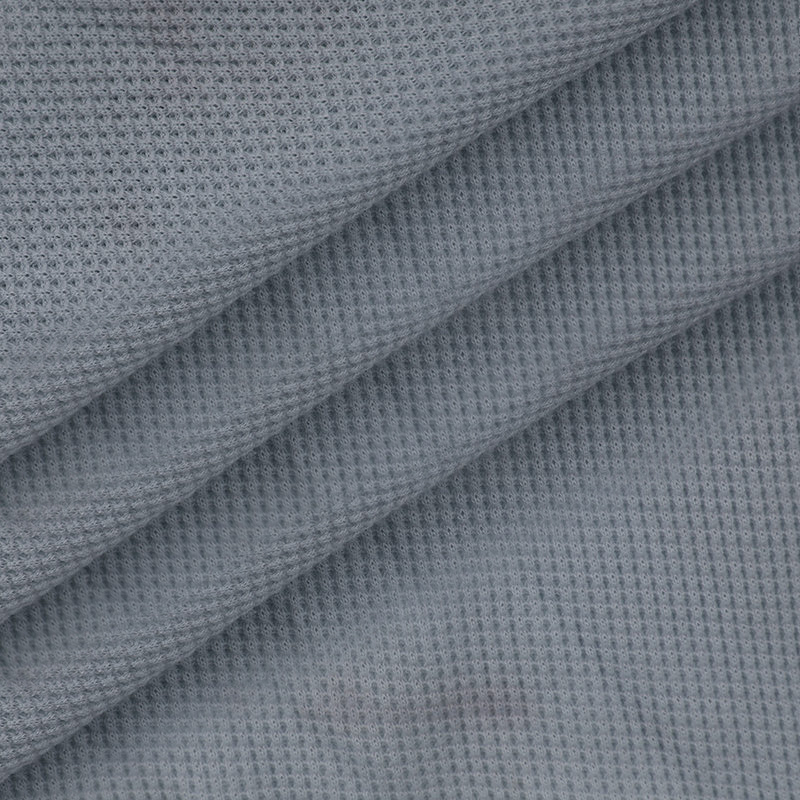
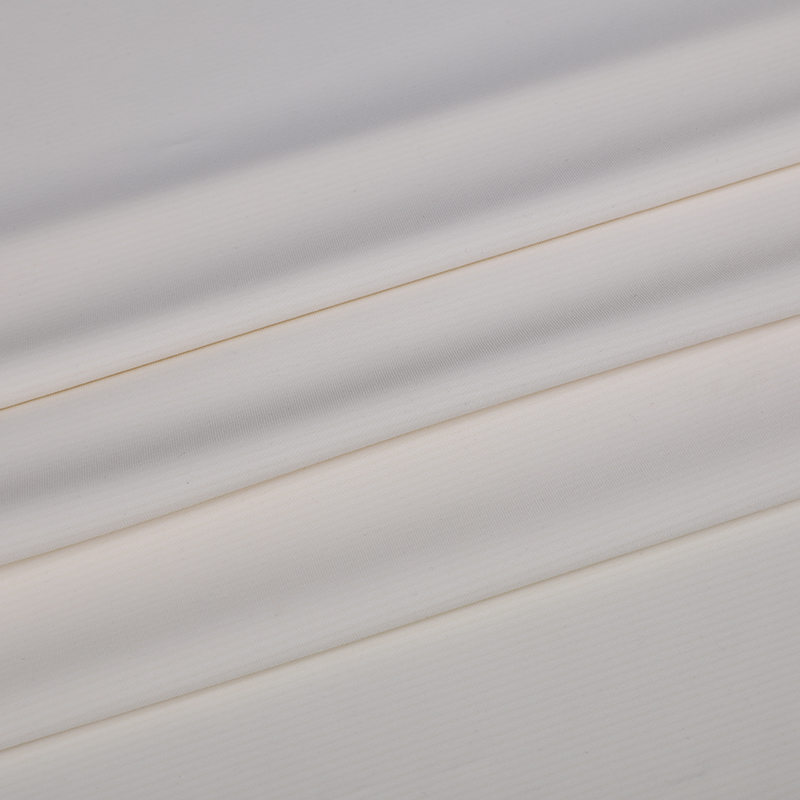
 APJ1018 Warp Knitted Jacquard Fabric with 5A Antibacterial FinishThis warp-knitted jacquard features layered three-dimensional patterns and a matte finish, offering breathability and antibacterial protection. It suits apparel programs seeking a brocade-like look with hygiene benefits.View Product →
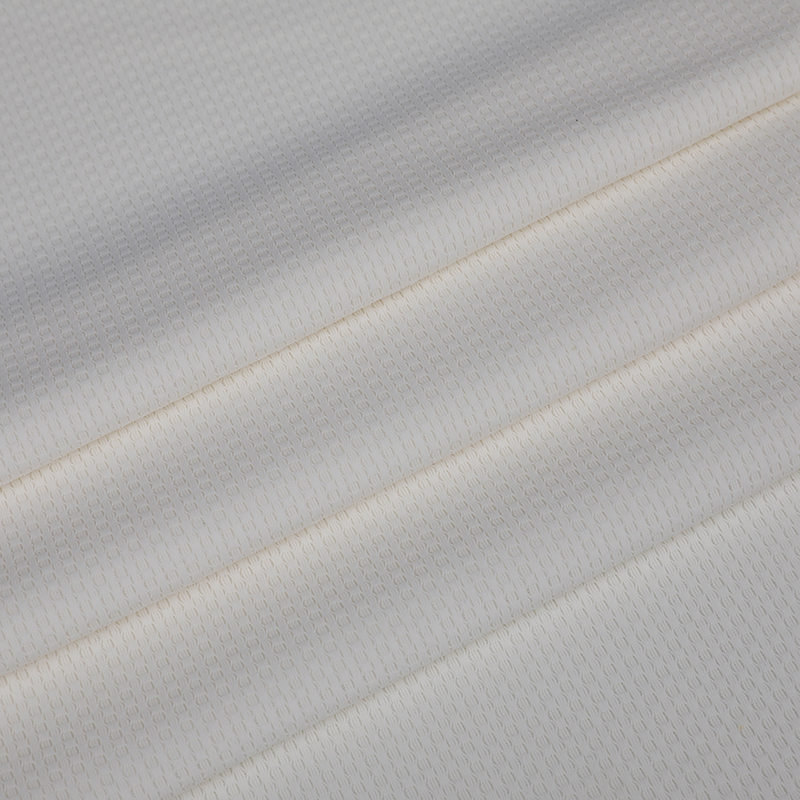
  CPS0982 Jacquard Double-Sided Stretch Fabric with Beaded TextureMade with nylon and spandex, this small-pattern jacquard provides four-way stretch and a refined texture. Its elasticity and durability make it suitable for pants, polo shirts, and active wear.View Product →
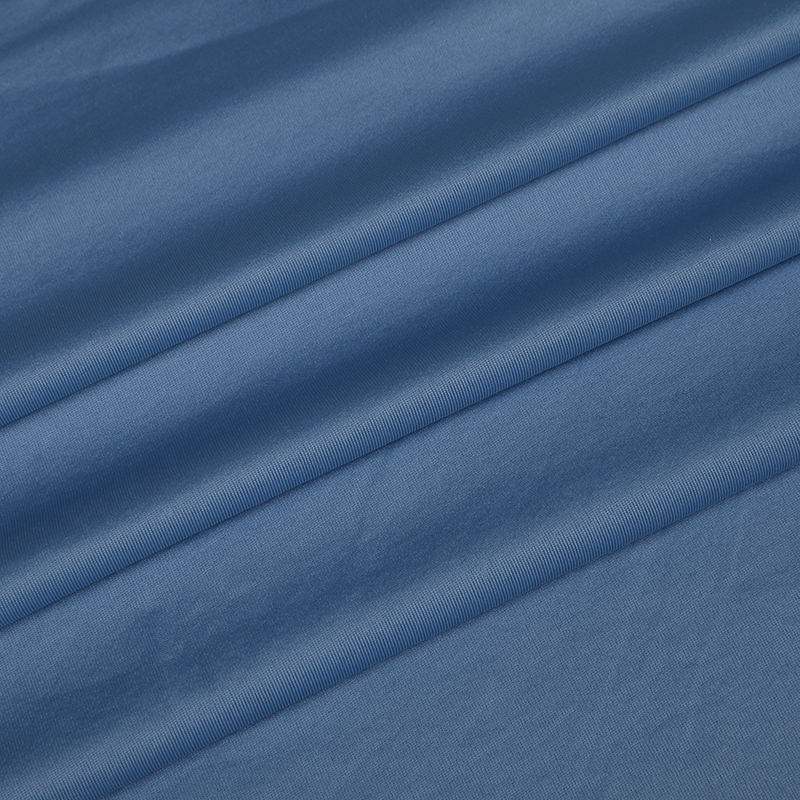
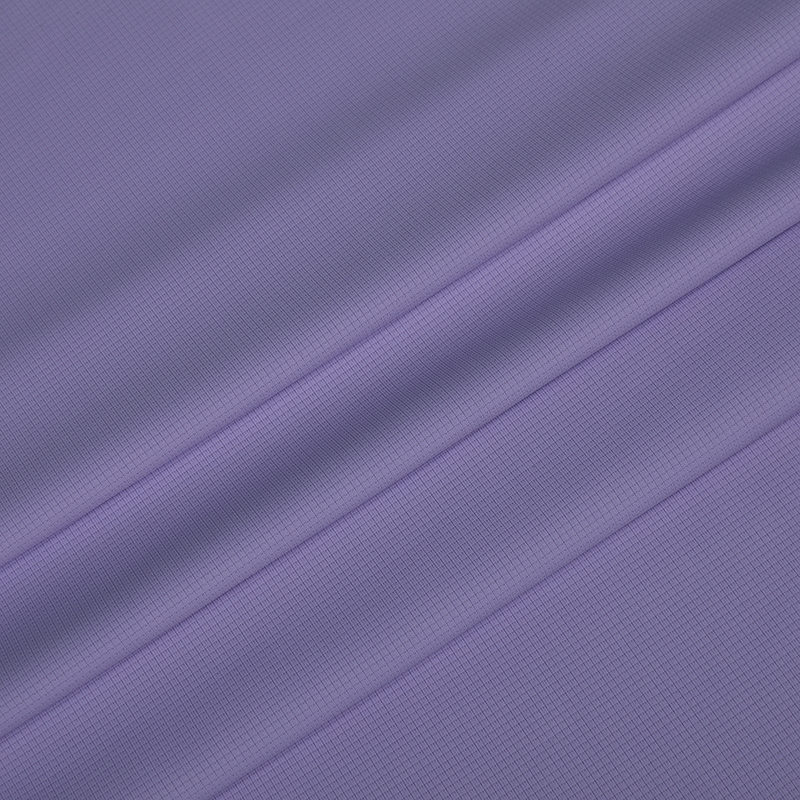
 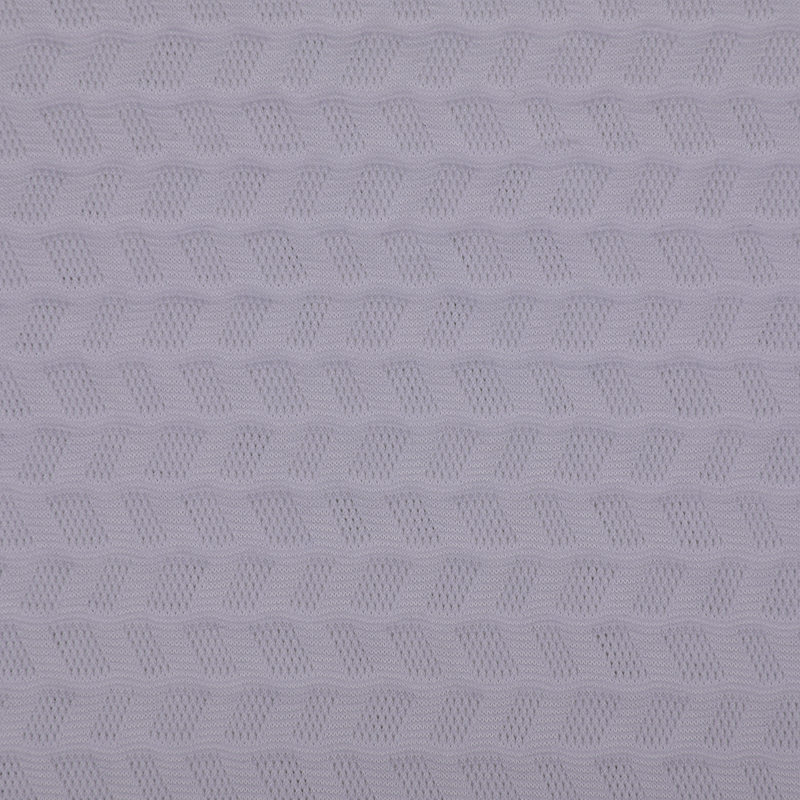 BPJ0671 Polyester-Spandex Sportswear Fabric with Diagonal JacquardThis oblique square jacquard fabric blends polyester and spandex for quick drying, high elasticity, and breathability. Its 165 GSM weight balances lightness and durability, ideal for athletic apparel.View Product →
When selecting a knitted jacquard for a brocade-inspired design, check the pattern depth against the stretch requirement. A deep, three-dimensional pattern usually consumes more yarn and reduces elasticity slightly. Open areas or mesh ground structures preserve ventilation but limit the size of raised motifs. For most apparel programs, small all-over repeats perform better in cutting and sewing than large centered motifs, because fabric yield is higher and matching during garment assembly is simpler.
Yarn composition matters as much as the jacquard file. Polyamide with elastane gives soft stretch and good recovery for fitted tops and swimwear. Polyester with mechanical stretch delivers shape retention and dimensional stability for pants and jackets. Blends with recycled polyester or bio-based materials address downstream sustainability requirements while preserving the visual effect of a raised motif.
Key Quality Indicators in Brocade and Jacquard Production
Whether the cloth is woven brocade or knitted jacquard, the same quality indicators apply during mill evaluation.
- Pattern definition: edges of the motif should be sharp, with no fused or blurred outlines.
- Float security: cut threads should not pull out after light friction; continuous floats on the reverse should be clipped or coated.
- Uniform tension: the ground weave should be even, without draw-in marks or waviness at the selvedge.
- Dimensional stability: wash shrinkage should stay under 3 percent for garment use; heat setting or back coating is often required.
- Colorfastness: yarn-dyed colors should withstand washing, perspiration, and light without bleeding.
- Repeat accuracy: adjacent pattern repeats should align within a tolerance of a few millimeters.
A useful practice is to request a strike-off trial before bulk production. In a trial, the mill sets the jacquard file, weaves a small sample of several meters, and applies the same finishing as the bulk order. The buyer can then verify the relief, hand, color, and shrinkage in a garment prototype. This is especially important for brocade, because pattern geometry changes when the fabric relaxes after dyeing and finishing.
Frequently Asked Questions
Q1: What is the difference between brocade and jacquard fabric?
Brocade is always woven on a jacquard-type loom, but the reverse is not true. Jacquard refers to any fabric whose pattern is created by individually controlled warp threads. Brocade adds a supplementary weft system that produces raised floats on the face. In simple terms, every brocade is a jacquard, but only a jacquard with an extra weft layer can be called brocade.
Q2: Can brocade be produced on knitting machines?
True woven brocade cannot be made on a knitting machine. Warp-knitted jacquard fabrics, however, reproduce the raised pattern effect with loops instead of floats, and they add stretch and breathability that woven brocade lacks. Apparel brands often choose knitted jacquards when the end use is sportswear, swimwear, or fitted casual wear, while woven brocade remains the choice for formal garments and interiors.
Q3: Why is brocade more expensive than ordinary jacquard fabric?
The extra yarn system, slower weaving speed, complex loom programming, and additional finishing all raise the cost. Discontinuous brocade, with its cut floats and clean reverse, is more expensive than continuous brocade. Synthetic filament brocade is the most economical, while silk and metallic zari brocades sit at the top of the price range.
Q4: How should brocade fabric be handled during garment production?
Cutting should follow the pattern direction, and the reverse floats should be secured by fusing or binding before sewing where possible. Needles should be fine and sharp to avoid breaking warp ends. Pressing should be done from the reverse side at a low temperature, with no steam applied directly to the face, otherwise the raised pattern may flatten.
Q5: What is the best fiber for a functional brocade-style apparel fabric?
For daily-wear garments that require washing, stretching, and repeated movement, a knitted jacquard with polyamide and elastane is more practical than traditional woven brocade. It offers pattern depth, recovery, moisture management, and lighter weight. Traditional silk or metallic brocade should be reserved for occasion wear and decor where handling is less demanding.
Brocade fabric has long been associated with luxury dress and formal interiors. Its raised, richly patterned surface appears in bridal wear, banquet curtains, and heritage upholstery. Behind that ornamental face is a tightly controlled production sequence. How is brocade fabric made? The answer involves multiple yarn systems, a special type of loom, and finishing steps that protect the raised pattern. This article explains the technical process for buyers, product developers, and anyone who specifies decorative textiles. It covers raw material selection, yarn preparation, jacquard programming, weaving mechanics, finishing, and quality evaluation. It also compares classic woven brocade with modern jacquard knitted alternatives used in apparel.
What Defines Brocade Fabric?
Brocade is a woven textile in which an extra set of non-structural weft threads is inserted to create a raised pattern on the face of the cloth. Unlike printed or embroidered decoration, the design is formed during the weaving operation and becomes part of the fabric structure.
Three yarn systems are involved. The ground warp and ground weft form the base cloth, while a supplementary brocading weft is woven only into specific areas to build the pattern. Where the design requires a motif, the brocading weft floats across the surface. Where it does not, the weft is either carried across the reverse side as a long float or cut away. This supplementary float structure is what distinguishes brocade from ordinary jacquard.
- Raised relief pattern visible on the face of the fabric
- Floating threads visible on the reverse side
- Ground weave can be satin, twill, or plain
- Pattern contrast depends on yarn color and fiber luster
- Weight typically ranges from medium to heavy
The term brocade is sometimes misused in the market. A true brocade requires the supplementary weft system. A single-layer jacquard fabric with woven-in color patterns but no extra weft is not brocade, even if the design looks similar at a distance.
Key principle: the brocading weft is a non-structural yarn. It exists purely for decoration, so it can be floated, cut, or trimmed without weakening the ground cloth.
Which Raw Materials Are Used to Make Brocade?
The material choice determines the look, cost, and care behavior of the finished fabric. Historically, brocade was woven with silk warp and weft, supplemented with gold or silver wrapped threads. Today, most commercial brocade uses synthetic filaments because they can be woven at higher speed and dyed in sharp colors.
| Fiber | Key Characteristics | Typical Use |
|---|---|---|
| Silk | High luster, smooth hand, high cost | Bridal and ceremonial apparel |
| Cotton | Matte surface, breathable, lower cost | Upholstery and ethnic garments |
| Polyester | Colorfast, durable, low cost | Evening wear and home textiles |
| Nylon | Strong, good elastic recovery | Decorative trims and stretch brocades |
| Metallic | Reflective, stiff, delicate | Traditional zari and festive wear |
Yarn preparation also influences the final result. Brocade is normally yarn-dyed rather than piece-dyed. Because the pattern is created by colored threads lying on the surface, each yarn package is dyed before weaving. This allows precise color registration and prevents dye penetration from blending adjacent motifs. The yarn count and twist level are selected according to the desired relief. Coarser high-twist yarns create a more pronounced raised effect, while fine filaments give a smoother and flatter pattern.
Sustainability is entering this segment as well. Recycled polyester and bio-based filaments are now available for brocade ground weaves, reducing the environmental load of the base cloth while keeping the same weaving sequence. The brocading weft, however, is usually left in virgin material because its low quantity per meter does not justify the extra cost of recycled yarn.
How Brocade Fabric Is Made Step by Step
The complete production route contains five main stages. Each stage can be adjusted to change quality, price, and pattern complexity.
Step 1: Yarn Preparation and Dyeing
Select the warp and ground weft according to the base weave. For silk, degumming removes sericin and improves luster. For synthetics, heat setting controls shrinkage. Packages are wound onto cones, and the yarn is dyed in the chosen pattern colors. After dyeing, lubricants or sizes are added to reduce friction in the loom.
Step 2: Warping
The warp threads are transferred from individual packages to a single warp beam. The number of ends is calculated from the fabric width and warp density. A typical brocade may contain 80 to 140 warp ends per centimeter, depending on yarn fineness. The warp must be evenly tensioned so that pattern registration stays accurate across the full width of the cloth.
Step 3: Jacquard Programming and Loom Setup
Brocade is woven on jacquard looms, in which every warp end is controlled independently by a harness. The pattern design is first converted into a control file. Older machines used punched cards; modern electronic jacquards read digital files and change designs in minutes. The jacquard head selects which warp ends are lifted for each pick, while a separate mechanism controls the insertion of the brocading weft. Pattern repeat size is limited by the number of hooks in the harness and by the memory of the control system.
Step 4: Weaving the Brocade Structure
During weaving, the ground warp and ground weft form a base cloth in a satin, twill, or plain weave. The supplementary brocading weft is inserted by a secondary weft system. For continuous brocade, this weft runs across the full fabric width and appears on the reverse wherever the pattern is absent. For discontinuous brocade, it is inserted only across the motif area, producing a cleaner reverse side and avoiding wasted yarn. The weaving speed is slower than standard jacquard because the extra weft prolongs each cycle. A typical machine weaves between 30 and 80 picks per minute, and a single dress-length panel can take several hours to complete.
Step 5: Finishing and Inspection
After weaving, the fabric is inspected for broken floats and missing pattern ends. Loose floats are trimmed by hand or by a shearing machine. Singeing removes protruding fibers from the surface. Pressing or calendering sets the pattern and enhances luster. Some brocades are back-coated to improve dimensional stability. Final inspection checks width, weight per square meter, colorfastness, pattern repeat accuracy, and shrinkage.
Types of Brocade Fabric and Their Production Differences
The classification of brocade matters when specifying fabric, because each type follows a different manufacturing route and carries a different price.
| Type | Weaving Method | Profile | Typical Use |
|---|---|---|---|
| Continuous brocade | Supplementary weft across full width | Heavy, floats on back | Upholstery and jackets |
| Discontinuous brocade | Supplementary weft cut per motif | Clean back, high cost | Luxury apparel |
| Zari brocade | Metallic wrapped thread | Rigid, reflective, delicate | Ceremonial wear |
| Silk brocade | Silk warp and weft | High luster, soft hand | Bridal and formal dress |
| Synthetic brocade | Polyester or nylon yarns | Affordable, durable | Fast-fashion evening wear |
From a production planning viewpoint, the most important distinction is between continuous and discontinuous brocade. Continuous brocade is faster because the weft is never cut inside the fabric. The accumulated floats on the reverse make the cloth heavier and more prone to snagging. Discontinuous brocade consumes less brocading yarn, but it requires an additional cutting pass and careful finishing, which increases labor cost and production time. When a brand orders brocade for garment manufacturing, the choice between these two routes directly affects the unit price and the hand feel.
Pattern density is another planning factor. A large-scale floral motif requires more hooks and a wider jacquard repeat, which may reduce the number of simultaneously woven panels. Small geometric repeats allow more efficient use of the loom width and therefore lower unit cost. For this reason, many entry-price brocade collections are designed around repeat sizes of 15 to 40 centimeters.
Traditional Handloom versus Modern Machine Production
The same structural principle is used on hand-operated draw looms and on high-speed electronic jacquard machines, but the economics and quality profiles are very different.
| Factor | Traditional Handloom | Modern Machine Jacquard |
|---|---|---|
| Labor input | One weaver plus draw boy | One operator per several looms |
| Production speed | Less than 5 meters per day | Up to several hundred meters per day |
| Pattern repeat | Limited by draw cords | Nearly unlimited digital memory |
| Design change | Days of re-tying | Digital file swap in minutes |
| Tension control | Manual and irregular | Automated and uniform |
| Cost per meter | Very high | Moderate to low |
Modern production does not necessarily produce a better brocade; it produces a more consistent and economical one. For apparel use, machine-made polyester brocade offers acceptable drape and color at a fraction of the handloom price. However, the tactile density of handwoven silk brocade, where slight irregularities give the cloth a living surface, is difficult to replicate mechanically. Buyers should define the end use first, then choose the technology that fits the target price and quality band.
In practice, the two routes serve different order profiles. Handloom production suits limited-edition pieces, restoration projects, and high-end tailoring where authenticity justifies a long lead time and a premium price. Machine production suits ready-to-wear programs with tight deadlines and repeat orders, where pattern consistency and yield are more important than artisanal character.
Modern Alternatives: Brocade-Style Patterns in Warp-Knitted Fabrics
Classic brocade is woven, but the apparel industry increasingly wants patterned, relief-looking textiles with stretch and breathability for sportswear, swimwear, and casual tops. Warp-knitted jacquard machinery produces raised geometric and floral motifs using loop structures rather than a supplementary weft. These fabrics imitate the visual depth of brocade while adding elasticity, lighter weight, and moisture management.
For a swimwear or activewear collection, a warp-knitted jacquard fabric can deliver a brocade-like ornamental surface without the stiffness and snagging risk of woven floats. Product developers can choose open-mesh jacquards for ventilation, dense double-faced jacquards for compression, and antibacterial treated jacquards for all-day wear. The design vocabulary is similar, including small checks, diamonds, honeycombs, and trailing vines, but the material behavior belongs to the knitted category. A detailed process comparison of jacquard double-beaded stretch fabric shows how the same yarn set can produce very different surface depth and stretch behavior.
The following warp-knitted jacquard options are examples that replace woven brocade effects in apparel:
APJ1018 Warp Knitted Jacquard Fabric with 5A Antibacterial FinishThis warp-knitted jacquard features layered three-dimensional patterns and a matte finish, offering breathability and antibacterial protection. It suits apparel programs seeking a brocade-like look with hygiene benefits.View Product → CPS0982 Jacquard Double-Sided Stretch Fabric with Beaded TextureMade with nylon and spandex, this small-pattern jacquard provides four-way stretch and a refined texture. Its elasticity and durability make it suitable for pants, polo shirts, and active wear.View Product → BPJ0671 Polyester-Spandex Sportswear Fabric with Diagonal JacquardThis oblique square jacquard fabric blends polyester and spandex for quick drying, high elasticity, and breathability. Its 165 GSM weight balances lightness and durability, ideal for athletic apparel.View Product →
When selecting a knitted jacquard for a brocade-inspired design, check the pattern depth against the stretch requirement. A deep, three-dimensional pattern usually consumes more yarn and reduces elasticity slightly. Open areas or mesh ground structures preserve ventilation but limit the size of raised motifs. For most apparel programs, small all-over repeats perform better in cutting and sewing than large centered motifs, because fabric yield is higher and matching during garment assembly is simpler.
Yarn composition matters as much as the jacquard file. Polyamide with elastane gives soft stretch and good recovery for fitted tops and swimwear. Polyester with mechanical stretch delivers shape retention and dimensional stability for pants and jackets. Blends with recycled polyester or bio-based materials address downstream sustainability requirements while preserving the visual effect of a raised motif.
Key Quality Indicators in Brocade and Jacquard Production
Whether the cloth is woven brocade or knitted jacquard, the same quality indicators apply during mill evaluation.
- Pattern definition: edges of the motif should be sharp, with no fused or blurred outlines.
- Float security: cut threads should not pull out after light friction; continuous floats on the reverse should be clipped or coated.
- Uniform tension: the ground weave should be even, without draw-in marks or waviness at the selvedge.
- Dimensional stability: wash shrinkage should stay under 3 percent for garment use; heat setting or back coating is often required.
- Colorfastness: yarn-dyed colors should withstand washing, perspiration, and light without bleeding.
- Repeat accuracy: adjacent pattern repeats should align within a tolerance of a few millimeters.
A useful practice is to request a strike-off trial before bulk production. In a trial, the mill sets the jacquard file, weaves a small sample of several meters, and applies the same finishing as the bulk order. The buyer can then verify the relief, hand, color, and shrinkage in a garment prototype. This is especially important for brocade, because pattern geometry changes when the fabric relaxes after dyeing and finishing.
Frequently Asked Questions
Q1: What is the difference between brocade and jacquard fabric?
Brocade is always woven on a jacquard-type loom, but the reverse is not true. Jacquard refers to any fabric whose pattern is created by individually controlled warp threads. Brocade adds a supplementary weft system that produces raised floats on the face. In simple terms, every brocade is a jacquard, but only a jacquard with an extra weft layer can be called brocade.
Q2: Can brocade be produced on knitting machines?
True woven brocade cannot be made on a knitting machine. Warp-knitted jacquard fabrics, however, reproduce the raised pattern effect with loops instead of floats, and they add stretch and breathability that woven brocade lacks. Apparel brands often choose knitted jacquards when the end use is sportswear, swimwear, or fitted casual wear, while woven brocade remains the choice for formal garments and interiors.
Q3: Why is brocade more expensive than ordinary jacquard fabric?
The extra yarn system, slower weaving speed, complex loom programming, and additional finishing all raise the cost. Discontinuous brocade, with its cut floats and clean reverse, is more expensive than continuous brocade. Synthetic filament brocade is the most economical, while silk and metallic zari brocades sit at the top of the price range.
Q4: How should brocade fabric be handled during garment production?
Cutting should follow the pattern direction, and the reverse floats should be secured by fusing or binding before sewing where possible. Needles should be fine and sharp to avoid breaking warp ends. Pressing should be done from the reverse side at a low temperature, with no steam applied directly to the face, otherwise the raised pattern may flatten.
Q5: What is the best fiber for a functional brocade-style apparel fabric?
For daily-wear garments that require washing, stretching, and repeated movement, a knitted jacquard with polyamide and elastane is more practical than traditional woven brocade. It offers pattern depth, recovery, moisture management, and lighter weight. Traditional silk or metallic brocade should be reserved for occasion wear and decor where handling is less demanding.
CONTACT US
If you need a quote or have any questions, you can fill out the following form to contact us.

ABOUT
PRODUCT
CONTACT US
-
 West 3rd Floor, Building 5, Zone A, Hangpai Garment Industrial Park, Changan Town, Haining City, Jiaxing City, Zhejiang Province
-
 +886978217318
-
 [email protected]/[email protected]
Copyright © Haining Junrui Textile Co., Ltd. All Rights Reserved.
