


 English
 中文简体
中文简体 Español
 日本語
日本語Submit feedback
 Home / News / Industry News / What Is Brocade Fabric Made Of? Key Fibers and Weave Structure Explained
Industry News
What Is Brocade Fabric Made Of? Key Fibers and Weave Structure Explained
2026-09-17
Brocade is not one fiber but a construction principle. A true brocade uses three yarn systems: the warp, the weft, and a supplementary brocading yarn that sits above the ground weave and forms raised, embroidered-looking motifs. Traditionally, brocade fabric was made of silk, with gold and silver threads reserved for the decorative passages. In modern textile commerce, the same visual language is reproduced in polyester, nylon, viscose, cotton, and stretch versions that add elastane to the blend. The material recipe determines drape, weight, elasticity, colorfastness, care tolerance, and final unit cost. This guide walks through the traditional composition of brocade, the modern fibers that have replaced silk, how brocade differs from jacquard and damask, and why knitted elastic brocade-style fabrics now matter to sportswear, swimwear, and casual apparel sourcing.
The Three Yarn Systems That Define Brocade
Every woven brocade begins with three yarn sets. The warp yarns run vertically through the loom, and the weft yarns cross them horizontally. The brocading yarns are inserted only where the pattern calls for them. Those brocading yarns are discontinuous: they float across the design area and are clipped or tucked into the reverse side when the motif ends. This extra yarn system is the structural fingerprint of brocade. When the floats remain uncut, they form a looped pile; when they are clipped flat, they create a raised, relief-like surface on a smooth ground.
Silk, Metal, and the Historical Recipe
From Han-dynasty China to Byzantine workshops and the looms of Renaissance Italy, the dominant raw material was silk. Mulberry silk filaments formed the warp and weft, while the ornamental sections used flat strips of gold or silver wrapped around a silk or linen core. Metal threads gave brocade its weight, shimmer, and stiffness, which is why it became the language of royal courts and church vestments. Cheaper variants appeared everywhere silk was expensive. India's himru combined cotton and silk to make the weave affordable for saris; central Europe developed wool brocades for heavy curtains; and French mills experimented with linen warps for furniture cloth. The lesson for a buyer is that brocade has always been a construction system waiting for locally available fibers.
Why Construction Matters More Than the Label
A fabric labeled brocade can be made almost entirely of synthetic yarn and still count as a brocade, because the name refers to the structure, not the content. Before ordering, request the fiber percentage of the warp, the weft, and the brocading yarn separately. Two fabrics sold under the same name can have opposite performance profiles if one uses a silk ground and the other a polyester ground.
Key point: Brocade is defined by its three-yarn construction. The material content is a separate specification that should be confirmed on every lot.
| Structural Role | Traditional Material | Modern Commercial Material | Primary Job |
|---|---|---|---|
| Warp yarn | Silk | Polyester or nylon | Ground strength and dimensional stability |
| Weft yarn | Silk or linen | Polyester, viscose, or cotton | Body, weight, and hand feel |
| Brocading yarn | Gold or silver wrapped on silk core | Rayon, metallic-look yarn, or high-twist polyester | Raised decorative motifs |
Modern Fibers in Commercial Brocade-Style Fabrics
Brocade-effect fabrics produced at industrial scale rely on fibers that dye evenly, hold their shape during high-speed weaving, and survive repeated cleaning. Four material families dominate the market.
- Polyester gives the best combination of low cost, colorfastness, and tensile strength. It resists wrinkles, dries quickly, and is the default ground fiber for decorative woven fabrics.
- Nylon adds abrasion resistance and a smoother, drier hand. It recovers from bending and stretching better than polyester, making it useful for swimwear and fitted garments.
- Viscose and rayon reproduce the luster and fluid drape of silk at a fraction of the price. They are therefore common in the brocading yarn or the weft, where softness improves the tactile appeal of the motif.
- Elastane and PBT introduce elasticity. In knitted jacquard versions they supply the crosswise stretch and recovery that woven brocade cannot offer.
Polyester-viscose blends are particularly frequent in fast fashion and middle-market apparel. The viscose softens the hand; the polyester controls shrinkage and adds wet strength. The interaction of the two fibers and their optimal ratios for different garment types is examined in more detail in our overview of polyester-rayon blend fabric. Recycled polyester is entering the same recipes under pressure from brand sustainability targets; the weave geometry stays identical, but the carbon footprint of the greige fabric drops measurably.
Typical composition ranges for commercial brocade-style fabrics:
- Woven jacquard for eveningwear: 100% polyester, or 65% polyester with 35% viscose
- Stretch jacquard knit for tops: 80-85% polyester with 15-20% elastane
- Swimwear brocade-effect knit: 78-82% nylon with 18-22% elastane
Do not assume that a patterned fabric contains silk just because it is called brocade. The richness of a modern jacquard comes from the loom, not from the fiber. A fully synthetic brocade-effect fabric is often indistinguishable from silk at a distance and is far easier to care for in daily use.
Brocade vs. Jacquard vs. Damask: Structural Differences
The three terms overlap in everyday trade language but describe different levels of classification. Jacquard is a weaving technology named after the punched-card loom that allows the machine to lift individual warp yarns, producing large and complex repeats. Brocade is a pattern result: a jacquard fabric whose design is formed by discontinuous supplementary weft floats on the surface. Damask is a cousin with no extra yarns; its pattern comes from switching between warp-faced and weft-faced weave structures, so the fabric is flat, smooth, and reversible.
The practical difference for a garment factory is weight, yarn consumption, and surface behavior. Brocade consumes more yarn per meter because of the decorative floats, so it is heavier and more expensive than damask of the same density. Damask is lighter and reversible, which explains its dominance in table linens. Jacquard is the umbrella term that includes both, alongside thousands of textured knits produced on modern electronic jacquard machines.
| Fabric Type | Extra Brocading Yarn | Surface | Reversible | Main Uses |
|---|---|---|---|---|
| Brocade | Yes, discontinuous | Raised relief motifs | No | Eveningwear, bridal, upholstery |
| Jacquard | Optional | Flat or textured | Depends on construction | Apparel, sportswear, home textiles |
| Damask | No | Flat satin contrast | Yes | Table linens, drapery, suiting |
When the same decorative logic moves from weaving to knitting, the structure changes again. Warp-knitted jacquard machines build patterns from loop transfers and yarn floats, and the ground fabric can be made elastic by laying in spandex. The result keeps the ornament of brocade while gaining the stretch of a knit. A side-by-side analysis in our comparison of jacquard and ordinary double-beaded stretch fabrics shows exactly how the process differences change the final hand and application.
Elastic and Knitted Brocade-Style Fabrics for Modern Apparel
Traditional woven brocade is deliberately stiff. That stiffness is appropriate for ball gowns but useless for yoga pants, swimwear, polo shirts, and fitted jackets. To combine decorative surface interest with body-hugging elasticity, textile mills developed warp-knitted jacquard stretch fabrics that imitate the raised motifs of brocade while delivering 15-30% crosswise stretch and reliable recovery.
The material logic is simple. Instead of three woven yarn systems, the knitted version uses a ground structure of polyester or nylon, spandex laid into the structure at regular intervals, and jacquard guide bars that create the pattern by controlling which needles receive yarn. Heat-setting fixes the loop geometry and the finished width. The composition choices follow the end application.
- Nylon with spandex: the best stretch recovery and a soft, dry hand; standard for swimwear, underwear, yoga tops, and fitted sports layers.
- Polyester with spandex: stronger colorfastness, lower cost, and a crisper print surface; widely used for sports jerseys, active tops, and fast-fashion pieces.
- Nylon-polyester-spandex tri-blends: combine the dimensional stability of polyester with the tactile quality of nylon for structured leggings and jackets.
Finished weights typically land between 180 and 320 gsm. A 190-210 gsm warp-knitted jacquard works for T-shirts, underwear, and lining; a 250-320 gsm version supports leggings, swimwear shells, and outerwear. Recycled polyester warp yarns and bio-based PBT elastic yarns are increasingly specified by brands that must report embedded carbon reductions, and they behave almost identically to virgin polymers when the knitting parameters are adjusted correctly.
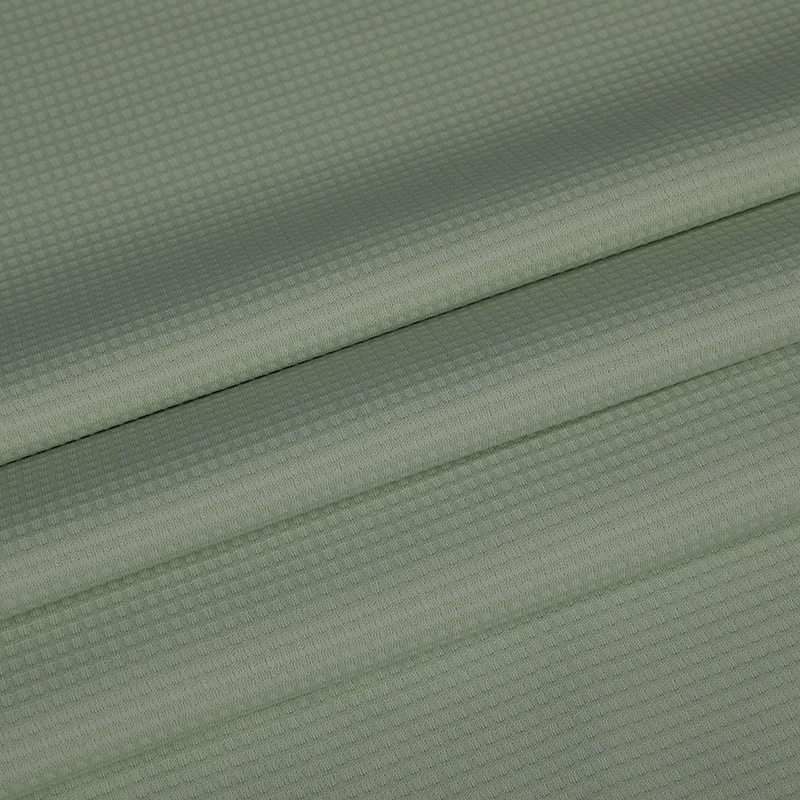
In the current product range, a warp-knitted jacquard with a small cube-block motif is engineered for polo shirts and sports tops, where the repeating geometry creates a brocade-like dimensional texture without the weight of a woven brocade.
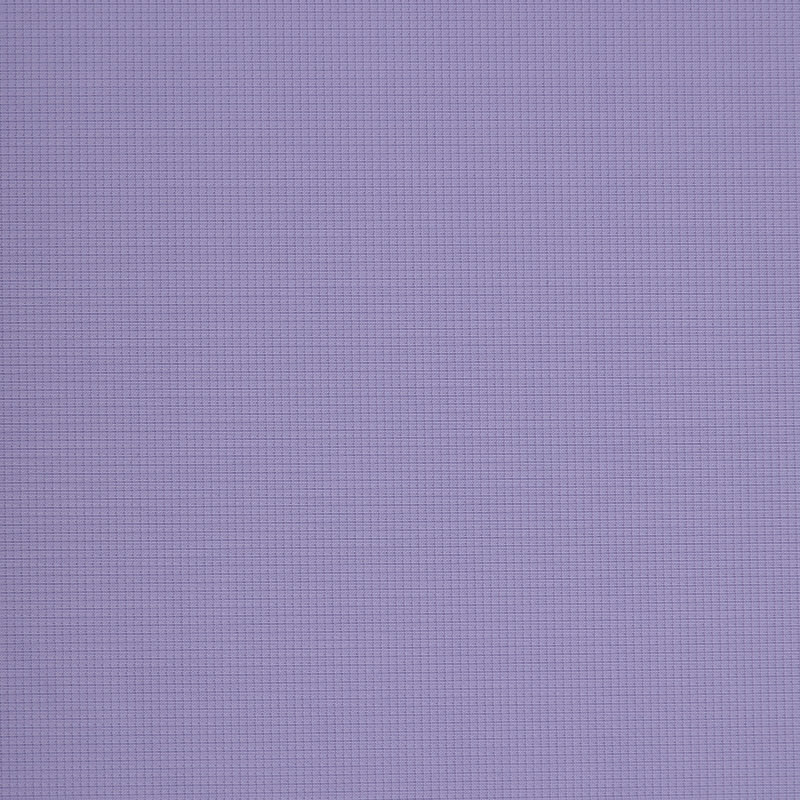 BPJ1905 Nylon-Spandex Small Rubik's Cube Jacquard Polo FabricThis warp-knitted jacquard with a cube-block motif offers a brocade-like texture for polo shirts and sports tops. The nylon-spandex blend and 165GSM weight balance durability, elasticity, and quick-drying comfort.View Product →
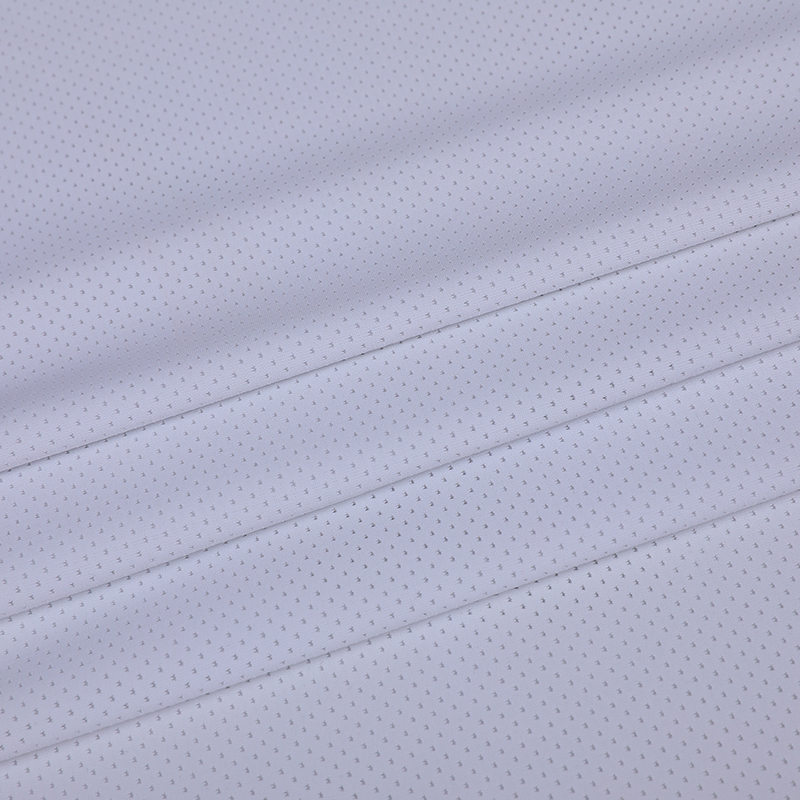
For activewear that needs hygiene functions, a warp-knitted jacquard with a dynamic bead texture combines the raised surface of a brocade with a 5A antibacterial finish, giving sportswear both texture and odor control.
 APJ1018 Warp-Knitted Jacquard with 5A Antibacterial FinishFeaturing a dynamic bead texture and a 5A antibacterial treatment, this warp-knitted fabric suits activewear requiring hygiene. Its nylon construction and breathable jacquard design help keep wearers dry and protected.View Product →
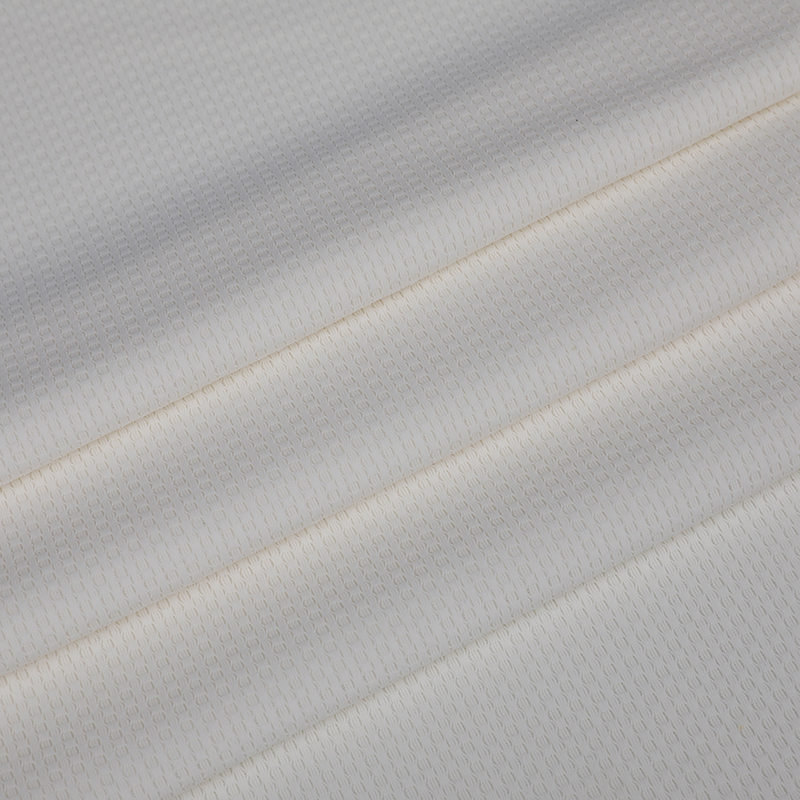
For dresses and leggings, a jacquard double-beaded stretch fabric with high elasticity keeps the motif visible on the body as the fabric follows the wearer's movement.
 CPS0982 Nylon-Spandex Double-Sided Bead Stretch FabricThis high-elasticity jacquard stretch fabric with a double-beaded texture is designed for dresses and leggings. The four-way stretch and durable interlocking structure keep the motif visible while allowing comfortable movement.View Product →
How Material Choice Affects Performance, Care, and Sewing
Selecting the fiber mix is a performance decision. Each raw material contributes a measurable property that a sourcing team can test in a lab or feel in a hand sample.
- Silk and metallic threads deliver the highest luster and the most formal look, but they yellow with age, weaken in sunlight, require dry cleaning, and cannot take high ironing temperatures.
- Polyester and nylon keep the pattern sharp after repeated machine washing, resist mildew, and dry in a fraction of the time needed by silk. Nylon is the better choice wherever abrasion is expected, such as swimwear.
- Viscose brightens color yield and softens the hand but creases and shrinks unless a resin finish is applied by the mill.
- Elastane and PBT provide the recovery that keeps a knitted jacquard taut over the body. Below roughly 10% elastane content, a fitted garment can bag out permanently at the elbows and knees.
Care instructions must follow the composition. Woven silk brocade belongs in a dry-cleaning drum and should be pressed on the reverse side at low temperature. Synthetic brocade-effect jacquards can be machine-washed at 30-40 degrees Celsius with a reduced spin cycle; high-temperature tumble drying relaxes the loops and makes the edges curl. For swimwear, common chlorine bleach accelerates the degradation of elastane, so the garment should be rinsed in fresh water after use. Cutting and sewing differ from plain textiles as well: use fine micro-serrated needles to avoid severing the floating brocading yarns, place pattern pieces in the length direction to prevent sideways distortion, and use a narrow zigzag stitch on knitted stretch versions so the seam stretches with the fabric.
Whenever a sample arrives, ask for three numbers before approving: the exact fiber percentage, the finished weight and width after heat-setting, and the chemical finishing list. Those three specifications predict most of the problems that appear later in the garment factory, in the warehouse, and in the consumer's washing machine.
Frequently Asked Questions
Q1: What is brocade fabric made of?
Traditionally, brocade is made of silk with gold or silver threads in the decorative brocading yarn. Modern versions use polyester, nylon, viscose, cotton, and elastane, but the structure remains the same: a warp, a weft, and a supplementary pattern yarn.
Q2: Is all brocade made of silk?
No. Silk is the historical standard, but regional traditions used cotton, wool, and linen. Most commercial brocade-effect fabric today is polyester or a polyester-viscose blend, and elastic knitted versions contain nylon with spandex.
Q3: What is the difference between brocade and jacquard?
Jacquard is the loom mechanism, while brocade is one of the results. A brocade is a jacquard fabric with extra discontinuous weft yarns that float on the surface as raised motifs. Therefore, every brocade is a jacquard, but only a small share of jacquard fabrics are brocades.
Q4: Can brocade fabric stretch?
Woven brocade has no stretch because of its rigid warp and weft construction. Knitted brocade-style jacquards that contain elastane, PBT, or high-elasticity polyester can reach 15-30% crosswise stretch while keeping a raised decorative surface.
Q5: How can I check whether a brocade uses real metallic thread?
Inspect the reverse side. Genuine metal-wrapped threads appear as short cold, dense floats. Synthetic metallic-look yarns are softer, slightly translucent, and never cold to the touch. A simple burn test on a cutting separates silk and metal from synthetic materials in seconds.

CONTACT US
If you need a quote or have any questions, you can fill out the following form to contact us.

ABOUT
PRODUCT
CONTACT US
-
 West 3rd Floor, Building 5, Zone A, Hangpai Garment Industrial Park, Changan Town, Haining City, Jiaxing City, Zhejiang Province
-
 +886978217318
-
 [email protected]/[email protected]
Copyright © Haining Junrui Textile Co., Ltd. All Rights Reserved.
