


 English
 中文简体
 Español
 日本語
Submit feedback
 Home / News / Industry News / What Makes Nylon Polyester Spandex Double Fabric Suitable for Apparel?

Industry News
What Makes Nylon Polyester Spandex Double Fabric Suitable for Apparel?
2026-11-20
Understanding the Construction and Application of BPS1875 Stretch Jacquard Fabric
Choosing a stretch fabric for apparel production requires more than checking its fiber composition or surface appearance. Fabric weight, elasticity, dimensional stability, surface texture, and compatibility with garment construction all influence the final product. nylon polyester ammonia double fabric is a relevant material category for buyers looking for a combination of synthetic fiber performance and stretch functionality. In professional textile terminology, ammonia in this search phrase generally refers to spandex or elastane.
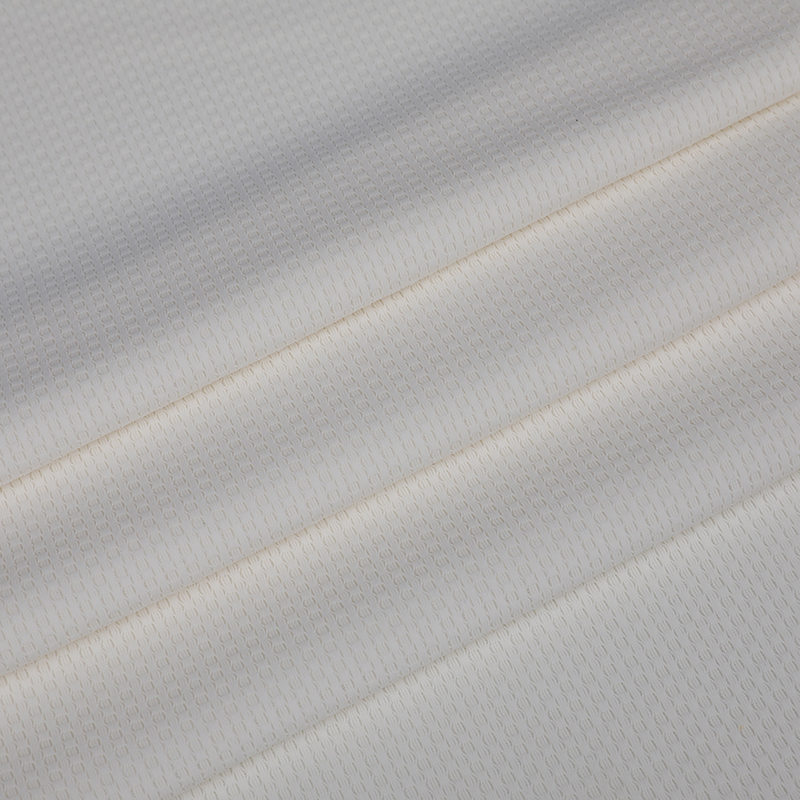
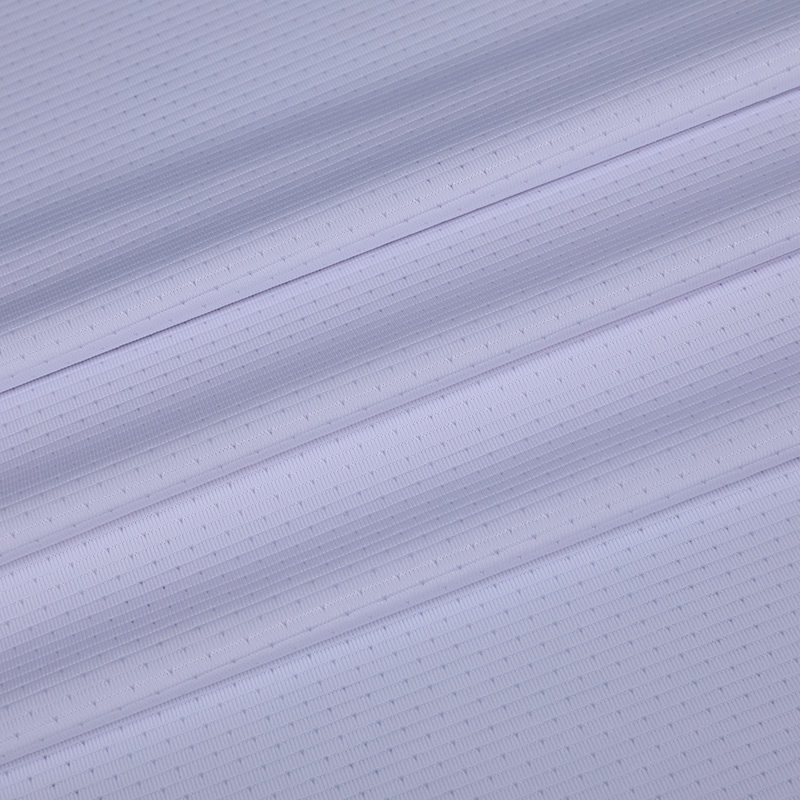
BPS1875 is a nylon, polyester, and spandex blended interlock fabric developed for apparel applications. Its N/T/OP composition is 65/25/10, with a fabric weight of 335 GSM and a width of 58/60 inches. The construction features a single-side polyester stretch jacquard surface, combining a patterned textile appearance with the functional characteristics of an elastic knitted structure.
For garment manufacturers, this combination offers several factors to consider when developing trousers, T-shirts, and other stretch apparel. The nylon and polyester components contribute different material characteristics, while spandex supports fabric extension and recovery. Understanding how these components work together helps buyers evaluate whether BPS1875 meets their requirements for garment fit, appearance, and production performance.
This guide examines the material composition, knitting construction, performance characteristics, technical specifications, application considerations, and sourcing requirements associated with BPS1875. It also explains which fabric properties should be tested before bulk production and what information buyers should prepare when requesting samples or wholesale quotations.
What Is BPS1875 Nylon Polyester Spandex Double Fabric?
BPS1875 belongs to the category of nylon polyester spandex double fabrics used in stretch apparel development. It combines three synthetic fiber components within an interlock knitted construction. Each component contributes a different functional characteristic, allowing the resulting material to balance flexibility, textile strength, surface appearance, and garment usability.
The term double fabric can describe different textile structures depending on the manufacturing process and supplier specification. In this product description, the defining construction information is the interlock knitting structure and single-side polyester stretch jacquard surface. Buyers should distinguish this description from a fabric made by bonding two independent textile layers. Confirming the actual construction with a physical swatch is important when a particular thickness, reverse-side appearance, or layered structure is required.
Material Composition of Nylon Polyester Spandex Fabric
The specified composition of BPS1875 is N/T/OP 65/25/10. In this textile specification, N represents nylon, T represents polyester, and OP represents spandex. The blend provides a combination of properties that can be useful in garments requiring stretch and a relatively substantial knitted fabric structure.
65%
Nylon
Provides textile strength, abrasion resistance, and flexibility for garments exposed to repeated movement and everyday wear.
25%
Polyester
Contributes dimensional stability, wrinkle resistance, and practical maintenance characteristics for apparel manufacturing.
10%
Spandex
Provides elastic extension and supports recovery after stretching, helping garments maintain a more consistent fit.
How the Three Fibers Work Together
Nylon and polyester have different textile characteristics, even though both belong to the synthetic fiber family. Nylon is commonly selected for applications where abrasion resistance and flexibility are important. Polyester is frequently used where dimensional stability, wrinkle management, and consistent fabric performance are required. Combining these materials allows textile developers to balance the characteristics of each fiber.
Spandex introduces an additional functional dimension. Unlike conventional non-elastic synthetic fibers, spandex can undergo substantial extension and return toward its original dimensions after the stretching force is released. Its presence is particularly relevant in garments designed for close-fitting silhouettes, bending movements, and repeated changes in body position.
For buyers searching for nylon polyester ammonia double fabric, understanding this composition is essential. The term ammonia is not the standard international fiber designation for this material. Spandex or elastane is the appropriate terminology for technical specifications, purchase orders, and communication with textile suppliers.
Interlock Knitting and Single-Side Polyester Jacquard Construction
Interlock is a knitted construction produced through an arrangement of intermeshing loops. Compared with many single-jersey constructions, interlock generally provides a more balanced structure, with a relatively stable surface and a different appearance on its two sides. Its construction can be useful for apparel where fabric body, surface consistency, and wearing comfort need to be considered together.
The jacquard element introduces patterned surface effects through the arrangement of knitted structures. Rather than relying exclusively on printed decoration, jacquard knitting creates patterns through the textile construction itself. This gives designers additional options for developing visual texture and differentiated garment surfaces.
BPS1875 is specified as a single-side polyester stretch jacquard fabric. The designation identifies its polyester jacquard surface and stretch-oriented knitted construction. Buyers should examine both sides of the material when evaluating the appearance, hand feel, and suitability for exposed garment areas. The reverse side may influence lining decisions, seam finishing, and the overall design of the finished product.
How Fabric Construction Influences Apparel Development
Key Performance Features of BPS1875 Stretch Jacquard Fabric
Fabric performance should be evaluated according to both laboratory specifications and the demands of the finished garment. A fabric may demonstrate substantial stretch but still require additional testing for recovery, dimensional stability, pilling, colorfastness, and resistance to repeated washing. For wholesale buyers, separating verified specifications from general performance expectations helps avoid misunderstandings during product development.
High Elasticity and Stretch Recovery
Elasticity is an important consideration when selecting nylon polyester spandex fabric for trousers and fitted apparel. The specified stretch performance of BPS1875 is at least 300% in the transverse direction and at least 200% in the longitudinal direction. These figures indicate substantial extension capacity under the applicable test conditions.
Transverse stretch is particularly relevant to garment areas that need to accommodate movement across the body. Examples include the hip, thigh, waist, and upper body. Longitudinal stretch contributes flexibility along the length of a garment and may influence comfort during sitting, walking, bending, and other everyday activities.
However, maximum stretch and stretch recovery are not interchangeable measurements. A fabric can extend considerably but may not recover sufficiently if its construction or finishing is unsuitable for the intended application. Buyers should therefore request the applicable stretch and recovery test methods, conditioning requirements, and measured results before establishing production standards.
- For trousers: Evaluate hip and knee movement, waist comfort, and the ability of the fabric to maintain its shape after repeated wear.
- For T-shirts: Examine chest and shoulder extension, sleeve movement, and recovery around the neckline.
- For fitted garments: Check whether the material maintains consistent coverage and surface appearance when stretched.
Breathability, Moisture Management, and Wearing Comfort
Breathability is an important factor in apparel intended for extended wear. The actual airflow performance of a knitted fabric depends on yarn characteristics, loop density, fabric thickness, finishing treatments, and the final garment structure. Interlock construction can provide a balanced knitted surface, but its breathability should be measured rather than assumed from the fabric name alone.
Moisture management also deserves attention. Synthetic fiber blends can be developed for different moisture transport characteristics, depending on their yarn structure and finishing process. Buyers evaluating a quick-dry breathable nylon polyester blend fabric should ask whether the material has undergone moisture absorption, drying-rate, or moisture transport testing.
For garments intended for warm-weather use, consider the relationship between fabric weight and ventilation. A higher GSM value does not automatically indicate poor comfort, but it may affect heat retention and the overall feel of the garment. The best assessment comes from evaluating the actual fabric in a finished garment rather than relying exclusively on a specification sheet.
Other factors, including surface softness, skin contact, and the presence of finishing agents, can influence perceived comfort. If the intended market has specific skin-contact or textile safety requirements, buyers should request relevant test documentation and confirm that the production material meets those requirements.
Durability, Wrinkle Resistance, and Colorfastness
Durability is determined by several interacting factors. Nylon contributes abrasion resistance, while polyester is commonly selected for its dimensional stability and wrinkle-management characteristics. The knitted construction, yarn quality, dyeing process, and finishing conditions also influence the long-term performance of the finished material.
For trousers, abrasion resistance is relevant in areas exposed to repeated contact, including the seat, inner thigh, and knee. For T-shirts, surface pilling and appearance retention may be more important during everyday use. These requirements should be translated into suitable fabric tests before bulk purchasing.
Colorfastness is another important purchasing consideration. Buyers should distinguish between resistance to washing, rubbing, perspiration, and light exposure because these are separate performance indicators. A fabric that performs well in one test does not necessarily achieve the same result in another.
Wrinkle resistance and dimensional stability should also be assessed after washing and drying. Garment manufacturers can reduce production uncertainty by checking shrinkage, spirality, width variation, and surface appearance under conditions that reflect the intended care instructions.
Main Applications of Nylon Polyester Spandex Double Fabric
The combination of a 335 GSM fabric weight, interlock construction, jacquard surface, and high specified stretch makes BPS1875 relevant to apparel projects requiring both textile structure and flexibility. Application suitability nevertheless depends on the garment pattern, seasonal positioning, design requirements, and the expectations of the target market.
Stretch Fabric for Men's and Women's Trousers
Trousers are an important application category for nylon polyester spandex double fabric because garment fit and movement comfort are closely related to fabric elasticity. A material with substantial transverse and longitudinal stretch can provide pattern developers with additional flexibility when designing slim-fit and straight-cut silhouettes.
For slim-fit trousers, buyers should evaluate the fabric's behavior around the hips, thighs, knees, and waist. The material needs to accommodate movement without creating excessive tension or an inconsistent surface appearance. Stretch recovery is particularly important because repeated sitting, walking, and bending can place continuous demands on the textile structure.
Straight-cut trousers may require a different balance. While freedom of movement remains important, the fabric must also maintain an appropriate drape and garment outline. The relatively substantial 335 GSM specification should therefore be considered alongside pattern dimensions and the intended style. Buyers should produce a trial garment to evaluate how the material behaves in actual use.
Potential product categories include:
- Men's casual stretch trousers for daily activities.
- Women's fitted trousers requiring flexibility and surface texture.
- Travel and leisure trousers designed for extended sitting and movement.
- Contemporary apparel incorporating jacquard surface details.
When developing these products, manufacturers should examine waistband construction, pocket reinforcement, seam elasticity, and the relationship between the fabric's stretch direction and garment pattern. These details help determine whether the selected material can support the required fit throughout the finished garment.
Polyester Stretch Jacquard Fabric for T-Shirts
T-shirts are another potential application for stretch jacquard knitted fabrics. Their requirements differ from those of trousers because surface appearance, neckline stability, sleeve movement, and direct skin contact are particularly important. The jacquard surface of BPS1875 provides an option for apparel designers who want a patterned textile appearance rather than relying entirely on plain fabric or printed graphics.
For fitted T-shirts, the fabric's elasticity may help accommodate movement around the shoulders, chest, and waist. The interlock structure also offers a relatively balanced knitted construction that designers can evaluate for different garment styles.
However, 335 GSM is a substantial weight for many conventional summer T-shirt applications. It may be more appropriate for structured, heavier-weight, fashion-oriented, or transitional-season T-shirts than for lightweight summer basics. Buyers should not select a fabric solely because it contains spandex. Instead, compare its weight, thickness, ventilation, and drape with the intended garment positioning.
Before bulk production, manufacturers should check whether the jacquard pattern remains visually consistent across garment panels and whether the fabric's stretch affects pattern matching. Neckline binding, shoulder seams, sleeve openings, and hem construction should also be tested to ensure that the garment maintains its intended shape.
Other Apparel Development Considerations
Beyond trousers and T-shirts, the material may be evaluated for other stretch apparel concepts where its weight, surface design, and construction are appropriate. These could include selected casualwear, fashion-oriented knitted garments, and structured leisure apparel. Such applications should be treated as development possibilities rather than guaranteed end uses.
For brands and garment factories sourcing wholesale nylon polyester spandex double fabric for garment production, the most effective approach is to match material characteristics with a defined product specification. A successful application depends on more than the general fabric category. Pattern requirements, production machinery, finishing processes, and consumer expectations all need to be considered.
Full Technical Specifications of BPS1875 Fabric
Technical specifications provide the basis for comparing fabric samples, preparing purchase orders, and establishing quality inspection standards. The following table summarizes the available product information for BPS1875 nylon polyester spandex double fabric. Values not included in the supplied specification should be confirmed with the manufacturer instead of being assumed.
| Specification Item | BPS1875 Details | Purchasing Significance |
|---|---|---|
| Item Number | BPS1875 | Product identification and sample reference |
| Fiber Composition | N/T/OP 65/25/10 | Nylon, polyester, and spandex blend |
| Nylon Content | 65% | Contributes strength and abrasion resistance |
| Polyester Content | 25% | Contributes dimensional stability and wrinkle resistance |
| Spandex Content | 10% | Provides elastic extension |
| Fabric Weight | 335 GSM | Important for garment thickness and positioning |
| Fabric Width | 58/60 inches | Relevant to marker planning and cutting efficiency |
| Knitting Structure | Interlock | Defines the knitted fabric construction |
| Surface Design | Single-side polyester stretch jacquard | Provides a patterned textile surface |
| Transverse Stretch | At least 300% | Relevant to crosswise garment movement |
| Longitudinal Stretch | At least 200% | Relevant to lengthwise garment movement |
| Intended Applications | Trousers and T-shirts | Supports stretch apparel development |
How Buyers Should Interpret Fabric Weight and Width
GSM refers to grams per square meter and indicates the mass of a given area of fabric. For apparel manufacturers, fabric weight influences material consumption, garment thickness, drape, and the positioning of the finished product. BPS1875 has a specified weight of 335 GSM, which should be considered when estimating consumption and evaluating the suitability of the fabric for a particular garment category.
Fabric width is equally important in production planning. The specified width is 58/60 inches. Buyers should confirm whether this refers to the usable width or the overall finished width, particularly when the fabric edges are not suitable for cutting. Actual usable width affects marker efficiency, cutting layouts, and material consumption calculations.
Additional Technical Information to Confirm Before Ordering
The available specifications do not establish every characteristic required for bulk production. Buyers should request further details according to their garment requirements, including:
- Fabric thickness and weight tolerance.
- Stretch recovery and residual deformation after repeated extension.
- Dimensional stability after washing and drying.
- Colorfastness to washing, rubbing, perspiration, and light.
- Resistance to pilling and surface abrasion.
- Applicable dyeing and finishing processes.
- Usable width and batch-to-batch consistency.
These items should be recorded in the approved sample specification or quality agreement. Doing so makes it easier for the buyer, fabric supplier, and garment factory to work toward the same acceptance criteria.
How to Evaluate Nylon Polyester Spandex Fabric Before Bulk Purchasing
Wholesale fabric purchasing involves several decisions beyond selecting a suitable fiber blend. For apparel manufacturers, the most important objective is to establish whether the material can consistently meet garment design, production, and quality requirements. A structured evaluation process can reduce the risk of selecting a fabric that performs differently from expectations after cutting and sewing.
Step 1: Review the Fiber Composition and Construction
Start by checking the fiber composition, knitting structure, and surface design. Confirm that the composition is N/T/OP 65/25/10 and that the sample corresponds to the BPS1875 interlock construction. If the purchase specification uses the phrase nylon polyester ammonia double fabric, clarify that the intended third component is spandex or elastane.
Request a technical specification sheet and ensure that the product identification, fabric weight, width, and construction details match the sample. This is especially important when several stretch jacquard fabrics are being evaluated for the same apparel project.
Step 2: Examine the Physical Fabric Sample
A physical swatch provides information that cannot be fully represented by a product description. Buyers should inspect the front and reverse surfaces, evaluate the hand feel, and check the uniformity of the jacquard pattern. Examine the fabric under different lighting conditions to identify possible differences in color appearance and surface texture.
It is also useful to stretch the fabric in both directions and observe how quickly it returns toward its original dimensions. This initial inspection is not a substitute for standardized testing, but it can help identify obvious differences between samples and expected product characteristics.
Step 3: Conduct Garment-Level Testing
Fabric performance during garment production may differ from its behavior as an uncut swatch. Sewing tension, seam construction, cutting direction, and finishing conditions can influence the final result. For this reason, buyers should produce a trial garment before approving large-volume orders.
For trousers, focus on the waistband, crotch seam, knees, and seat area. For T-shirts, inspect the neckline, shoulders, sleeves, and hem. Evaluate how the garment fits during movement and whether the jacquard pattern remains consistent across different panels.
Step 4: Confirm Quality Requirements and Production Details
Once the sample is approved, establish the measurable requirements for bulk production. These may include composition, GSM tolerance, finished width, color standard, shrinkage limits, stretch recovery, and appearance criteria. Buyers should also agree on inspection procedures and how nonconforming materials will be handled.
For repeat orders, retaining an approved reference swatch is useful for comparing subsequent production batches. This helps reduce disputes arising from differences in hand feel, shade, surface appearance, or measured fabric weight.
Wholesale Fabric Purchasing Checklist
01
Verify the 65/25/10 fiber composition.
02
Confirm 335 GSM and 58/60-inch width.
03
Inspect the interlock and jacquard surfaces.
04
Request stretch and recovery test results.
05
Evaluate washing and colorfastness performance.
06
Approve a sample before bulk production.
What to Consider When Choosing a Nylon Polyester Spandex Fabric Manufacturer in China
Choosing a reliable nylon polyester spandex fabric manufacturer in China requires evaluating production experience, technical communication, customization capabilities, quality management, and export coordination. A supplier's ability to provide a suitable sample is important, but buyers should also consider whether the manufacturer can maintain consistent specifications throughout a commercial order.
Textile Manufacturing Experience and Technical Knowledge
Long-term experience in textile manufacturing and sales can help a supplier understand the practical requirements of different apparel projects. A production history extending over multiple decades may provide familiarity with fiber blending, knitted fabric development, finishing processes, and the coordination of repeat orders.
However, years of experience alone are not sufficient evidence of product quality. Buyers should assess the supplier's ability to explain construction details, respond to technical questions, and provide documentation that supports the stated product specifications. Clear communication is especially important when international buyers use different terminology for the same textile material.
Sample Development and Customization Support
Sampling is an important part of the fabric sourcing process. Before placing a wholesale order, buyers may need to evaluate color, surface appearance, hand feel, weight, and compatibility with a garment pattern. A supplier that supports swatch sampling and color development can make it easier to assess the material during the product development stage.
For customized projects, discuss the exact requirements before production begins. Depending on the supplier's available machinery and development capabilities, customization discussions may cover fiber blends, colors, jacquard patterns, fabric weight, and finishing requirements. Not every change is possible without affecting other fabric characteristics, so technical feasibility should be confirmed in advance.
OEM and ODM Material Development
OEM and ODM support can be relevant to apparel brands and garment factories that require materials tailored to specific product concepts. Different fiber combinations may be considered for different end uses, including blends involving cotton, viscose, nylon, polyester, and spandex.
For example, a buyer seeking a softer hand feel may evaluate a different fiber combination from one prioritizing abrasion resistance or dimensional stability. The appropriate choice depends on the target garment, performance requirements, and manufacturing budget. Buyers should request actual development samples rather than assuming that an alternative blend will retain all the characteristics of BPS1875.
Export Coordination and Quality Communication
International sourcing requires clear coordination of specifications, sample approval, order quantities, packaging, and shipping arrangements. A supplier familiar with overseas markets may be better prepared to communicate with buyers across different purchasing systems and documentation requirements.
Markets such as Europe, North America, Japan, Australia, and Southeast Asia can have different product expectations and applicable textile compliance requirements. Buyers should communicate their destination-market requirements at the beginning of the sourcing process, including any applicable chemical restrictions, labeling rules, and testing standards.
How to Compare Potential Fabric Suppliers
| Evaluation Area | Questions to Ask | Expected Evidence |
|---|---|---|
| Production Experience | How long has the supplier worked with knitted stretch fabrics? | Production history and relevant product experience |
| Technical Capability | Can the supplier explain composition and construction? | Technical sheets and sample details |
| Customization | Can colors, patterns, or material specifications be adjusted? | Development samples and confirmed specifications |
| Quality Control | How are weight, width, shade, and defects inspected? | Inspection standards and quality records |
| Export Service | Can the supplier coordinate international orders? | Confirmed order and shipping arrangements |
For buyers planning recurring wholesale purchases, supplier evaluation should focus on repeatability rather than a single successful sample. A consistent production process and documented quality requirements can help establish a more stable sourcing relationship.
Custom Nylon Polyester Spandex Fabric for Apparel Production
Standard fabric specifications may not satisfy every garment development project. Apparel brands often have specific requirements for color, pattern, weight, elasticity, and surface appearance. Custom nylon polyester spandex fabric development can help bridge the gap between standard textile products and the technical requirements of a particular garment collection.
Color and Jacquard Pattern Development
Color consistency is important when fabrics are used across multiple garment panels or different production batches. Buyers should provide a recognized color reference and confirm the approval procedure before bulk dyeing. Where the material uses a jacquard surface, pattern dimensions, repeat positioning, and visual consistency should also be reviewed.
For garment designs requiring multiple fabric panels, the relationship between the jacquard repeat and the cutting layout deserves particular attention. Poor pattern positioning can affect the visual balance of the finished garment and increase material waste. A pre-production sample can help identify these issues before the full order is processed.
Adjusting Fabric Weight and Fiber Blends
Fabric weight and fiber composition influence the performance and positioning of a finished garment. A 335 GSM material may be suitable for a particular structured apparel design, while a lighter construction could be more appropriate for another product category. Buyers should therefore specify the desired weight range and intended end use when discussing alternatives.
Changing the proportions of nylon, polyester, or spandex may also influence stretch behavior, surface appearance, durability, and manufacturing conditions. Any adjustment to the N/T/OP 65/25/10 blend should be treated as a separate development specification. The final material should be tested independently rather than assuming that its performance will be identical to standard BPS1875.
Finishing Requirements and Compliance
Finishing processes can influence fabric hand feel, appearance, dimensional stability, and other functional characteristics. Buyers should communicate whether the material requires particular finishing treatments or performance targets. Any claims relating to quick drying, antibacterial performance, easy care, or other specialized properties should be supported by relevant test results.
For international apparel production, buyers should also review applicable restricted-substance requirements and destination-market standards. Testing requirements may differ according to product type, intended user, and country of sale. Confirming these requirements early can prevent additional testing or production adjustments later in the sourcing process.
Custom Fabric Development Process
01
Requirement Communication
Define garment application, composition, weight, width, color, and performance targets.
02
Sample Evaluation
Review physical samples, surface design, elasticity, and suitability for garment construction.
03
Specification Confirmation
Approve the technical details, quality criteria, and applicable testing requirements.
04
Bulk Production
Proceed according to the confirmed order quantity and agreed production schedule.
05
Inspection and Delivery
Check the finished fabric against the approved requirements before shipment.
Factors Affecting the Wholesale Price of Nylon Polyester Spandex Double Fabric
The wholesale price of a stretch jacquard fabric depends on more than its GSM or fiber composition. Buyers comparing quotations should consider the complete production specification, because differences in yarn quality, knitting structure, dyeing, finishing, and order volume can influence the final cost.
Fiber Selection and Yarn Costs
Nylon, polyester, and spandex have different raw material costs and supply conditions. Their proportions influence the overall material cost, while yarn specifications and sourcing arrangements may introduce further differences. For BPS1875, the N/T/OP 65/25/10 composition provides a clear starting point for quotation comparisons.
Knitting Structure and Jacquard Complexity
Knitting requirements influence machine operation, production efficiency, and material consumption. Interlock construction and jacquard pattern development may involve different production considerations from basic knitted fabrics. More complex pattern requirements may also require additional development and approval work.
Fabric Weight, Width, and Finishing
A fabric's weight and finished width influence its material consumption and production planning. Finishing requirements may also affect the quotation, especially where a project involves specific appearance or performance targets. Buyers should compare quotations using the same finished specifications rather than evaluating price per kilogram or per meter in isolation.
Order Quantity and Customization Requirements
Order quantity can affect production scheduling, material preparation, and the commercial terms offered by a supplier. Customized colors or patterns may involve separate development requirements. Buyers should ask for the minimum order quantity, sample charges, bulk pricing, lead time, and available payment terms before placing an order.
For a more accurate quotation, provide the product number, required quantity, preferred color, intended application, delivery destination, and any additional testing requirements. This allows the supplier to evaluate the project according to its actual production conditions.
Frequently Asked Questions About Nylon Polyester Spandex Double Fabric
Q1: What is nylon polyester ammonia double fabric used for?
Nylon polyester ammonia double fabric is a search term commonly used to describe nylon, polyester, and spandex blended textile materials. The standard industry term for ammonia in this context is spandex or elastane. BPS1875 is an interlock stretch jacquard fabric designed for evaluating applications such as trousers and T-shirts. Its suitability depends on garment weight requirements, stretch behavior, surface appearance, and the intended wearing conditions.
Q2: What is the composition of BPS1875 nylon polyester spandex fabric?
BPS1875 has an N/T/OP composition of 65/25/10, consisting of 65% nylon, 25% polyester, and 10% spandex. Nylon contributes strength and abrasion resistance, polyester supports dimensional stability, and spandex provides elastic extension. Buyers should use this composition as the reference specification when requesting samples and quotations.
Q3: What is the GSM of BPS1875 single-side polyester stretch jacquard fabric?
The specified fabric weight is 335 GSM. Its width is 58/60 inches. These specifications should be confirmed against the approved production sample and the supplier's applicable weight and width tolerances before bulk ordering.
Q4: What is the stretch performance of BPS1875 fabric?
The available specification indicates transverse stretch of at least 300% and longitudinal stretch of at least 200%. These figures describe the stated extension performance. Buyers should separately confirm stretch recovery, residual deformation, and the applicable test method when evaluating the fabric for finished garments.
Q5: Is nylon polyester spandex double fabric suitable for trousers?
It can be considered for stretch trousers, including slim-fit and straight-cut styles. Its elastic construction may support movement around the waist, hips, and knees. However, buyers should evaluate the 335 GSM weight, garment drape, stretch recovery, and seam performance through a trial garment before confirming the material for bulk production.
Q6: Can BPS1875 be used for summer T-shirts?
BPS1875 may be considered for selected T-shirt designs, particularly those requiring a structured or heavier-weight jacquard appearance. At 335 GSM, it is heavier than many conventional lightweight summer T-shirt materials. Buyers should evaluate ventilation, moisture management, hand feel, and garment weight before choosing it for warm-weather basics.
Q7: Can I get a fabric sample before placing a bulk order?
Swatch sampling can be discussed before bulk purchasing. Buyers should provide their required color, quantity, and intended garment application when requesting a sample. Sample availability, charges, preparation time, and delivery arrangements should be confirmed with the supplier.
Q8: What is the MOQ for wholesale nylon polyester spandex double fabric?
The minimum order quantity depends on the supplier's production arrangements, stock availability, color requirements, and customization needs. No fixed MOQ is established in the available BPS1875 specifications. Buyers should request confirmation of the MOQ for standard material and any customized development separately.
Q9: Can the composition or color of BPS1875 be customized?
Customization can be discussed according to the supplier's development and production capabilities. Potential requirements may include color selection, jacquard design, fabric weight, and alternative fiber blends. Any change to the original 65/25/10 composition should be confirmed through a new technical specification and sample approval process.
Q10: What information should I provide when requesting a wholesale quotation?
Provide the BPS1875 item number, required quantity, preferred color, intended application, delivery destination, and any special performance requirements. If customization is needed, include the target composition, weight, width, pattern, and finishing requirements. This information helps the supplier evaluate production feasibility and prepare a more accurate quotation.
Q11: How should I test nylon polyester spandex fabric before production?
Start with a physical sample inspection covering composition, weight, width, surface appearance, and hand feel. Follow this with relevant tests for stretch recovery, dimensional stability, pilling, abrasion, and colorfastness. Finally, produce a trial garment to assess sewing performance, fit, movement comfort, and appearance after washing.
Q12: What is the difference between spandex and ammonia in fabric descriptions?
Spandex is the commonly used North American term for an elastic synthetic fiber, while elastane is widely used in other international textile markets. Ammonia is not the standard fiber name for this material. In the phrase nylon polyester ammonia double fabric, ammonia is generally intended to refer to spandex. Professional specifications should use the recognized fiber designation to avoid confusion.
BPS1875 | FABRIC SOURCING
Request Technical Details and Samples for BPS1875 Fabric
When evaluating nylon polyester spandex double fabric for an apparel project, access to accurate specifications and physical samples can make material selection more efficient. Buyers can use the BPS1875 reference number to discuss the 65/25/10 fiber composition, 335 GSM weight, 58/60-inch width, interlock construction, and single-side polyester stretch jacquard surface.
For wholesale purchasing, prepare your estimated order quantity, color requirements, intended garment category, and destination market. If your project requires customized material development, include the desired performance targets and any relevant testing standards. The supplier can then confirm sample availability, minimum order quantity, production lead time, and quotation details according to the specific requirements.
01Technical Specification Confirmation
02Swatch Sample Request
03Wholesale Price Inquiry
04Customized Fabric Discussion
Providing complete purchasing information at the initial inquiry stage helps establish clear expectations for sampling, product evaluation, and subsequent bulk production.
CONTACT US
If you need a quote or have any questions, you can fill out the following form to contact us.

ABOUT
PRODUCT
CONTACT US
-
 West 3rd Floor, Building 5, Zone A, Hangpai Garment Industrial Park, Changan Town, Haining City, Jiaxing City, Zhejiang Province
-
 +886978217318
-
 [email protected]/[email protected]
Copyright © Haining Junrui Textile Co., Ltd. All Rights Reserved.
