


 English
 中文简体
中文简体 Español
 日本語
日本語Submit feedback
 Home / News / Industry News / What Makes Nylon Polyester Ammonia Double Fabric the Preferred Choice for High-Stretch Garment Programs?
Industry News
What Makes Nylon Polyester Ammonia Double Fabric the Preferred Choice for High-Stretch Garment Programs?
2026-10-16
What Is Nylon Polyester Ammonia Double Fabric and Why Does the Name Matter
The term nylon polyester ammonia double fabric describes a three-fiber blend constructed on an interlock knitting machine, where two sets of needles produce two interlocking fabric faces. In export markets the same structure is frequently listed as nylon polyester spandex double fabric, because ammonia is a literal translation of the Chinese term for spandex. Buyers scanning supplier catalogs will encounter both spellings, and understanding that they refer to the same elastane-based interlock construction prevents costly specification errors during sampling.
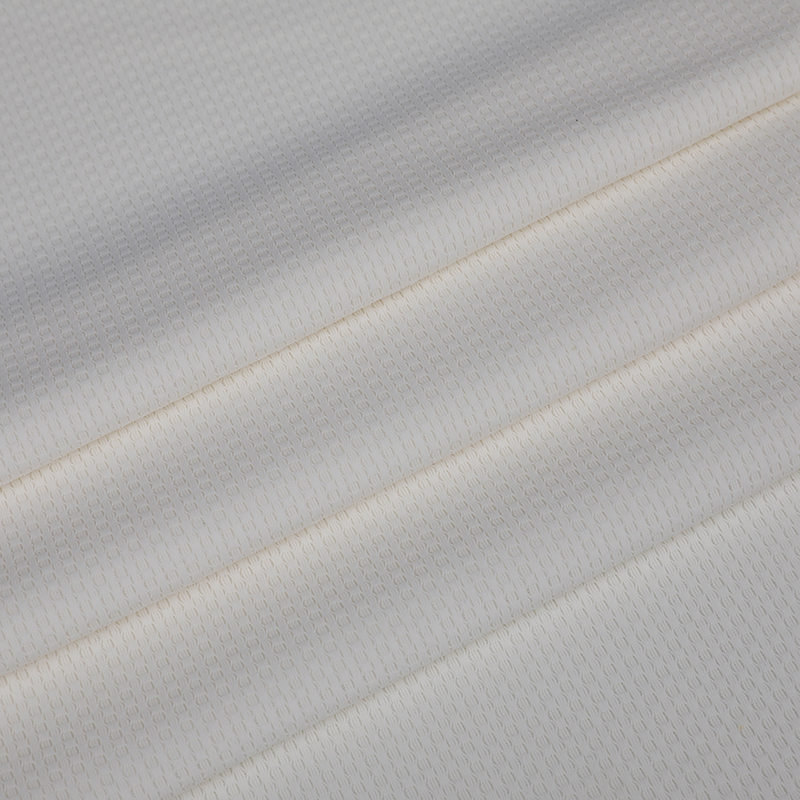
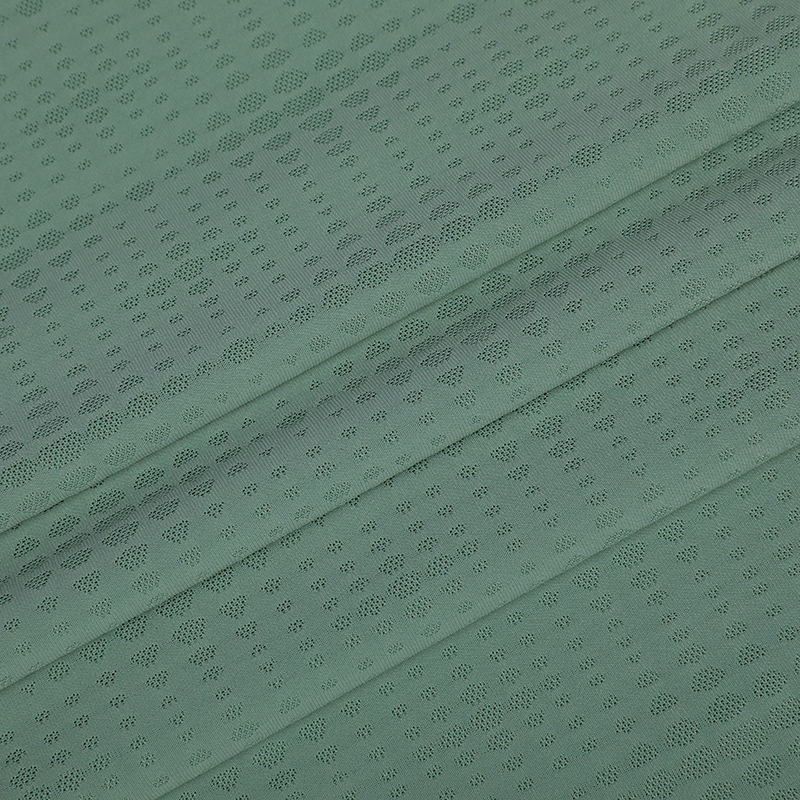
Unlike a simple single-knit jersey, a double fabric has two distinct surfaces. This allows one face to be engineered for appearance, such as a jacquard pattern or a matte finish, while the reverse face is engineered for skin contact, moisture transport, or warmth retention. The three-fiber recipe combines nylon for tensile strength and abrasion resistance, polyester for dimensional stability and color retention, and spandex for elastic recovery. The result is a fabric that holds its shape through repeated wear and washing cycles, a property that matters greatly in trousers and activewear where bagging and sagging are common failure points.
For sourcing teams, the practical question is not whether the name is ammonia or spandex, but whether the mill can deliver consistent stretch, colorfastness, and hand feel across repeat orders. That is a question of process control, yarn selection, and finishing discipline, which the following sections examine in detail.
Fiber System Nylon / Polyester / Spandex
Knitting Structure Interlock Double Knit
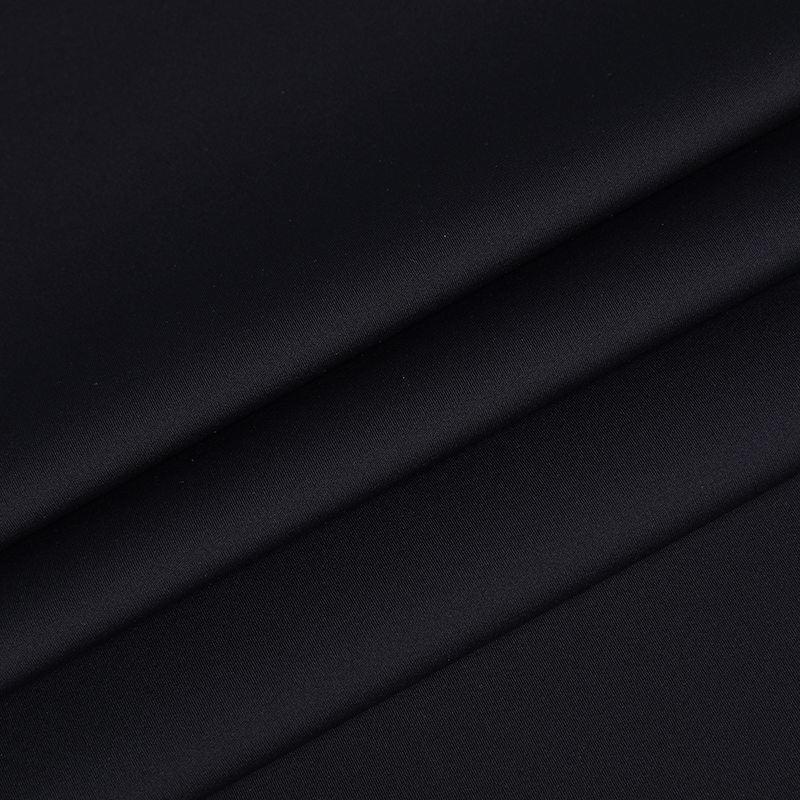
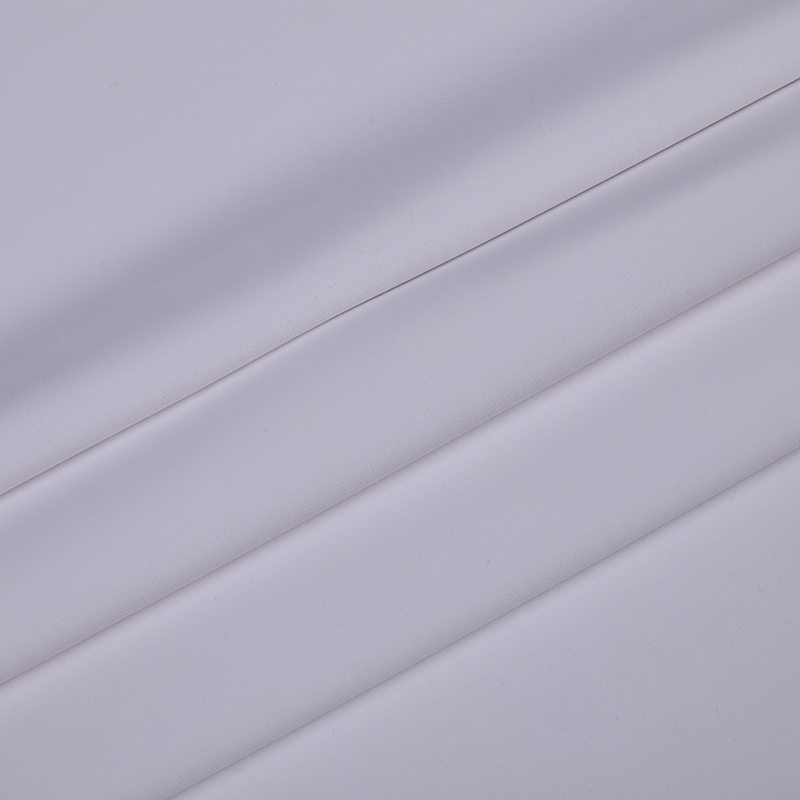
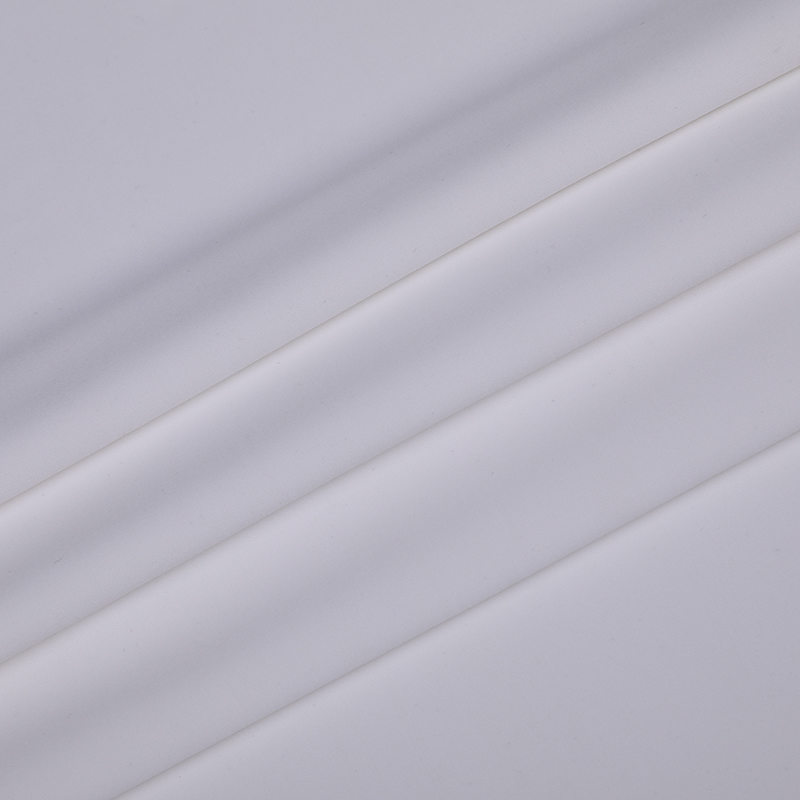
Typical Weight 335 GSM
Stretch Direction 4-Way
How Fiber Ratio and Interlock Structure Determine Fabric Behavior
Material Composition and Performance Contribution
A representative specification for this fabric family uses a nylon, polyester, and spandex ratio of approximately 65/25/10. Each fiber contributes a distinct performance attribute, and shifting the ratio changes the hand feel, recovery, and cost profile. The table below summarizes the functional role of each component.
| Fiber | Typical Share | Primary Contribution | Effect of Increasing Share |
|---|---|---|---|
| Nylon | 60 to 70 percent | Abrasion resistance, tensile strength, smooth hand | Higher durability, slightly higher cost |
| Polyester | 20 to 30 percent | Wrinkle resistance, color retention, shape stability | Faster drying, firmer hand |
| Spandex | 8 to 12 percent | Elastic recovery, body-hugging fit | Greater stretch, slower recovery above 12 percent |
Moisture management is often misunderstood in this blend. Nylon and polyester are both hydrophobic, meaning they do not absorb water into the fiber core. Instead, the interlock structure and the yarn texturing create capillary channels that move liquid sweat to the fabric surface where it evaporates. This is why the fabric can be described as quick-dry even though neither synthetic component absorbs moisture. The spandex content, if kept within the 8 to 12 percent range, does not significantly block these channels because it is wrapped or plaited rather than exposed on the surface.
Interlock Weaving and the Single-Sided Dual-Material Concept
Interlock knitting uses two needle beds and two yarn sets. Each yarn set forms loops that are interlocked with the opposite set, producing a fabric that is twice as thick as a single jersey of the same yarn count and that has no curling edges. The jacquard capability allows pattern formation by selecting individual needles, so geometric or abstract textures can be produced without printing. A single-sided dual-material design means the face and back can use different yarns, for example a polyester-rich face for print clarity and a nylon-rich back for smooth skin contact.
The absence of curl is a practical advantage on cutting tables. Single-knit fabrics tend to roll at the edges, which increases cutting waste and slows sewing. Interlock fabric lies flat, allowing tighter marker layouts and more consistent ply alignment. For factories running high-volume trouser or t-shirt lines, this directly reduces fabric consumption per garment.
Key Performance Features That Matter to Garment Engineers
Marketing language such as high quality or premium hand feel carries little weight with technical buyers. What matters is measurable performance. The following list translates common fabric claims into specific, testable properties.
- Elasticity and recovery: horizontal stretch of 300 percent or more and vertical stretch of 200 percent or more, with recovery above 95 percent after repeated extension. This prevents knee bagging in trousers and elbow distortion in long-sleeve tops.
- Moisture transport and quick-dry behavior: capillary wicking moves sweat to the surface; drying time is typically under 30 minutes under standard laboratory conditions, compared with over 60 minutes for cotton jersey of similar weight.
- Wrinkle resistance and colorfastness: polyester content reduces creasing during wear and laundering; colorfastness to washing and rubbing is commonly rated 4 or higher on a 5-point scale.
- Air permeability: the interlock structure balances density with breathability, so the fabric does not feel stuffy in summer or excessively cold in transitional seasons.
- Blend flexibility: the same interlock platform can incorporate viscose, cotton, or recycled polyester, allowing buyers to adjust hand feel, sustainability profile, and cost without changing the knitting structure.
Comparison with Ordinary Polyester Knit Fabric
Ordinary single-knit polyester jersey is inexpensive and widely available, but it has three recurring weaknesses in stretch garment applications. First, it lacks sufficient elastic recovery unless spandex is added, and even then the single-knit structure tends to grow during wear. Second, it can feel clammy because the flat surface holds moisture against the skin. Third, it curls at the edges, which complicates cutting and sewing. The interlock double fabric addresses all three issues through structure rather than through chemical finishes alone.
| Property | Ordinary Polyester Single Knit | Nylon Polyester Spandex Interlock |
|---|---|---|
| Edge curling | Yes, noticeable | No |
| Stretch recovery | Low to moderate | High, above 95 percent |
| Dimensional stability | Moderate | High |
| Hand feel | Flat, sometimes clammy | Smooth, dry touch |
| Best use | Low-cost casual wear | Technical trousers, activewear |
Where Nylon Polyester Ammonia Double Fabric Performs Best
Application fit is determined by the combination of weight, stretch, and surface texture. At 335 GSM, the fabric sits in the mid-to-heavy range for stretch knits, which makes it suitable for bottoms and structured tops rather than lightweight summer dresses.
Men and Women Pants: Slim-Fit and Straight-Cut Programs
Business casual trousers, travel pants, and stretch chinos benefit from the fabric's recovery and wrinkle resistance. A 335 GSM interlock provides enough body to hang cleanly without lining, while the 4-way stretch allows a close fit without restricting movement. The jacquard surface can mimic a woven texture, giving a more formal appearance than a plain jersey.
T-Shirts and Active Sportswear
For training tops, yoga wear, and golf polos, the quick-dry and moisture-wicking properties reduce cling and chill after exercise. The fabric's opacity at 335 GSM eliminates the need for a second layer in most colorways, which simplifies garment construction and reduces cost.
Other Custom Garment Options
Additional uses include casual jackets, uniform tops, and compression liners. Because the interlock machine can produce custom jacquard patterns, buyers can develop proprietary surface designs without committing to printed fabric, which avoids the color migration and cracking issues sometimes seen in pigment printing on stretch knits.
For sourcing teams building a trouser or t-shirt line, the critical specification is not the fiber name alone but the combination of weight, stretch direction, recovery rate, and surface design. A 335 GSM interlock with 4-way stretch covers a wider range of end uses than a lighter single knit, reducing the number of fabric qualities that must be stocked.
How to Evaluate a Nylon Polyester Spandex Interlock Fabric Supplier
Supplier selection in this category should be based on verifiable process capability rather than catalog claims. The following criteria are drawn from common audit points used by garment brands and trading companies.
- Knitting and finishing equipment: modern interlock machines with electronic jacquard selection, plus stenters and heat-setting lines capable of stable width and weight control.
- Batch-to-batch consistency: the ability to reproduce the same GSM, width, stretch, and shade across repeat orders. Ask for two production lots and compare them side by side.
- Colorfastness testing: documented results for washing, rubbing, perspiration, and light, ideally from a third-party laboratory.
- Sample service: swatch cards that show the actual production quality, not a hand-made laboratory sample that cannot be replicated at bulk scale.
- Customization capability: willingness to adjust fiber ratio, weight, width, and jacquard pattern within a defined development timeline.
- Export experience: familiarity with the documentation, packaging, and labeling requirements of the destination market.
A supplier that can provide a full technical datasheet, including fiber content, GSM, width, stretch percentages, shrinkage, and recommended care instructions, is generally better prepared for bulk production than one that only offers a price per kilogram. The datasheet also becomes the reference document for resolving any quality dispute after shipment.
Frequently Asked Questions
Q1: What is the difference between ammonia and spandex in the fabric name?
There is no difference in the fiber itself. Ammonia is a direct translation of the Chinese word for spandex, and it appears in many supplier listings from China. International buyers more commonly use the term spandex. When specifying, always confirm the elastane content by percentage rather than relying on the name alone.
Q2: What is the typical GSM of nylon polyester ammonia double fabric?
Weights range from about 220 GSM for lighter tops to 335 GSM and above for structured bottoms. The 335 GSM version is common in trouser and activewear programs because it provides opacity, body, and enough substance to hold a jacquard texture.
Q3: Can the jacquard pattern be customized?
Yes. Electronic jacquard interlock machines can produce custom surface designs by needle selection. Buyers typically provide a design file or a reference swatch, and the mill develops a sample for approval before bulk production.
Q4: Is this fabric suitable for summer t-shirts?
It can be, depending on weight. A lighter version in the 220 to 260 GSM range works well for summer tops because the interlock structure transports moisture and dries quickly. The 335 GSM version is more suitable for bottoms or cooler-season tops.
Q5: What is the minimum order quantity for wholesale supply?
Minimum order quantities vary by mill and by whether the color and pattern are stock or custom. Custom jacquard patterns and custom dyeing generally require a higher minimum than stock qualities. Buyers should confirm the MOQ for each specific specification before placing a development order.
Q6: How should this fabric be cared for to maintain stretch and appearance?
Machine wash cold, tumble dry low, and avoid high iron temperatures. Chlorine bleach and fabric softener can degrade spandex over time. Following these guidelines helps maintain elastic recovery, color, and surface texture through repeated laundering.
Summary for Sourcing Decisions
Nylon polyester ammonia double fabric, also listed as nylon polyester spandex interlock, is a engineered knit that combines durability, stretch recovery, and moisture management in a single structure. Its value lies in the interlock construction, which eliminates edge curl, improves dimensional stability, and allows jacquard surface design without printing. For trousers, t-shirts, and activewear, the 335 GSM version offers a practical balance of weight, opacity, and stretch. When evaluating suppliers, focus on batch consistency, documented test results, and the ability to reproduce samples at bulk scale. These factors determine whether the fabric performs as expected in the finished garment, which is the only measure that matters to the end consumer.



CONTACT US
If you need a quote or have any questions, you can fill out the following form to contact us.

ABOUT
PRODUCT
CONTACT US
-
 West 3rd Floor, Building 5, Zone A, Hangpai Garment Industrial Park, Changan Town, Haining City, Jiaxing City, Zhejiang Province
-
 +886978217318
-
 [email protected]/[email protected]
Copyright © Haining Junrui Textile Co., Ltd. All Rights Reserved.
