


 English
 中文简体
 Español
 日本語
Submit feedback
 Home / News / Industry News / What Buyers Need to Know About Nylon Polyester Ammonia Double Fabric for Yoga Wear

Industry News
What Buyers Need to Know About Nylon Polyester Ammonia Double Fabric for Yoga Wear
2026-10-29
Ammonia, Spandex, and Elastane: Sorting Out the Terminology
Buyers who search for a nylon polyester ammonia double fabric for yoga wear usually want a clear answer to two questions: will this knit hold its shape through hundreds of training sessions, and will it feel comfortable against the skin? Before any construction detail matters, the vocabulary needs to be settled, because the same elastic fiber appears under several names depending on where a specification was written.
In English-language textile trade, the stretch fiber is most often called spandex in North America and elastane in Europe and much of Asia. The word ammonia is a direct carry-over from Chinese usage and still appears in some supplier catalogs and older documents. Whether a sheet says ammonia, spandex, or elastane, the material being described is the same family of segmented polyurethane elastic fiber, so a careful reader should treat the three words as synonyms.
This matters for sourcing because search terms and specification terms rarely match. A design team may write the requirement as nylon polyester spandex double knit, a buyer may search for double knit yoga fabric, and a sourcing manager may note that the leggings need interlock construction. Each phrase can point to the same product if the fiber blend and knitting method are identical. Treat the vocabulary as a translation problem, and confirm the composition in writing rather than relying on a name alone.
Practical rule: when a quotation names the fabric, ask for the fiber composition by percentage range and the knitting structure. Names vary between regions, but percentages and construction determine how the fabric will perform.
How Double Knit Construction Creates Two Working Faces
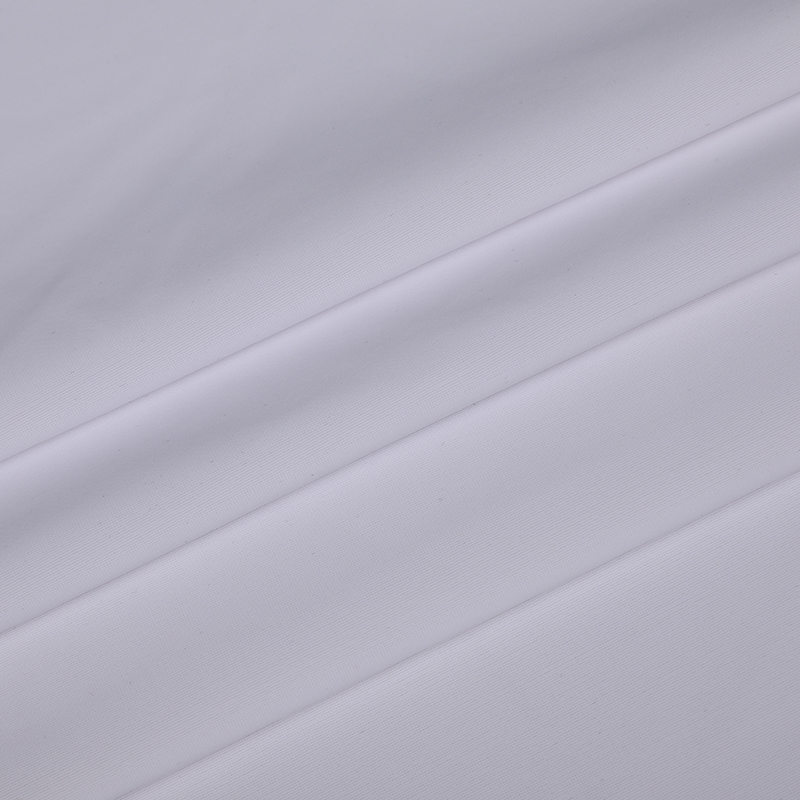
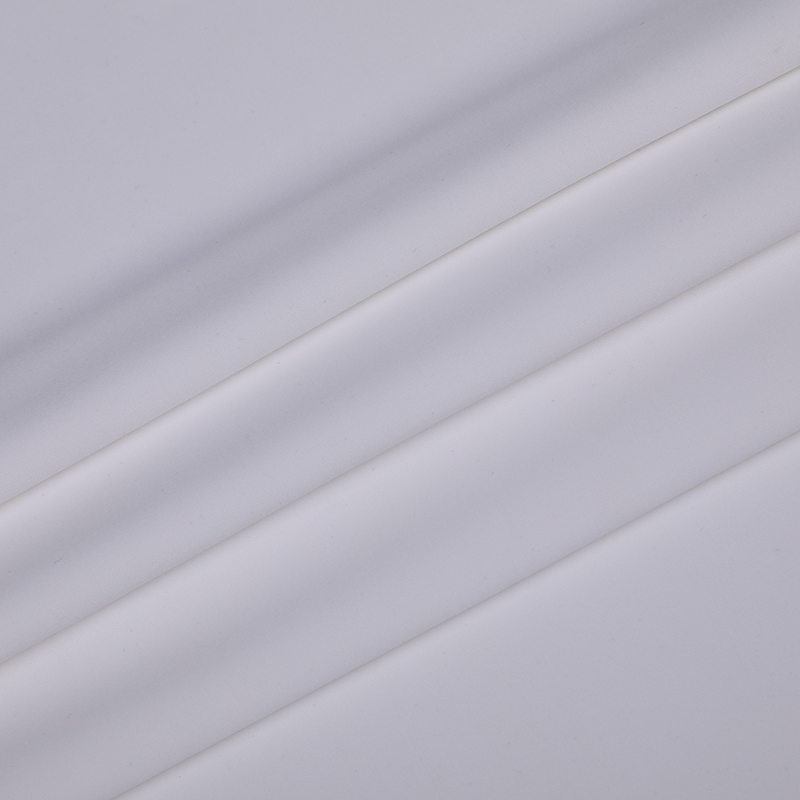
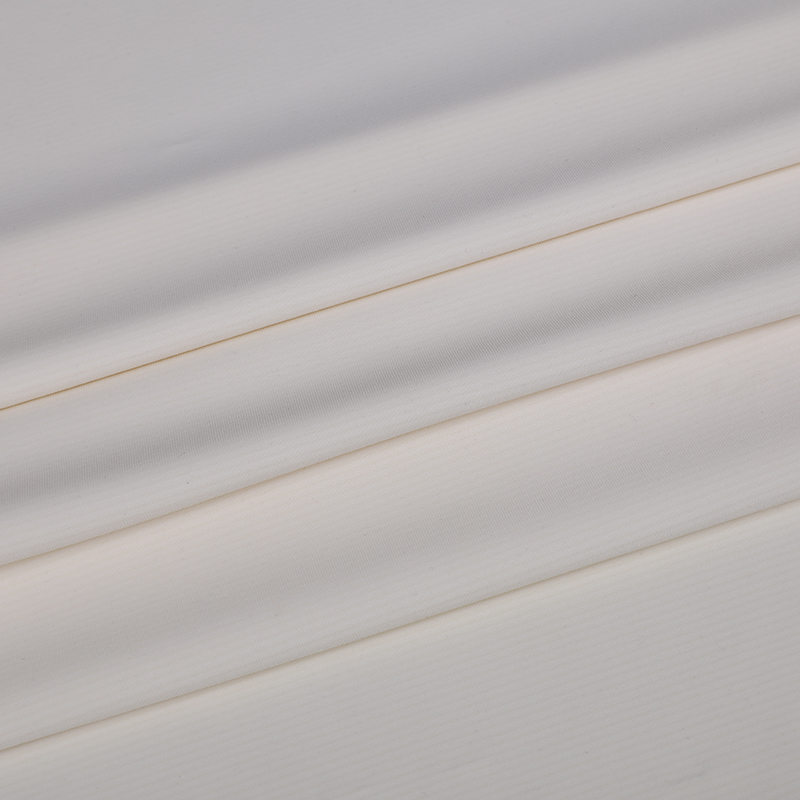
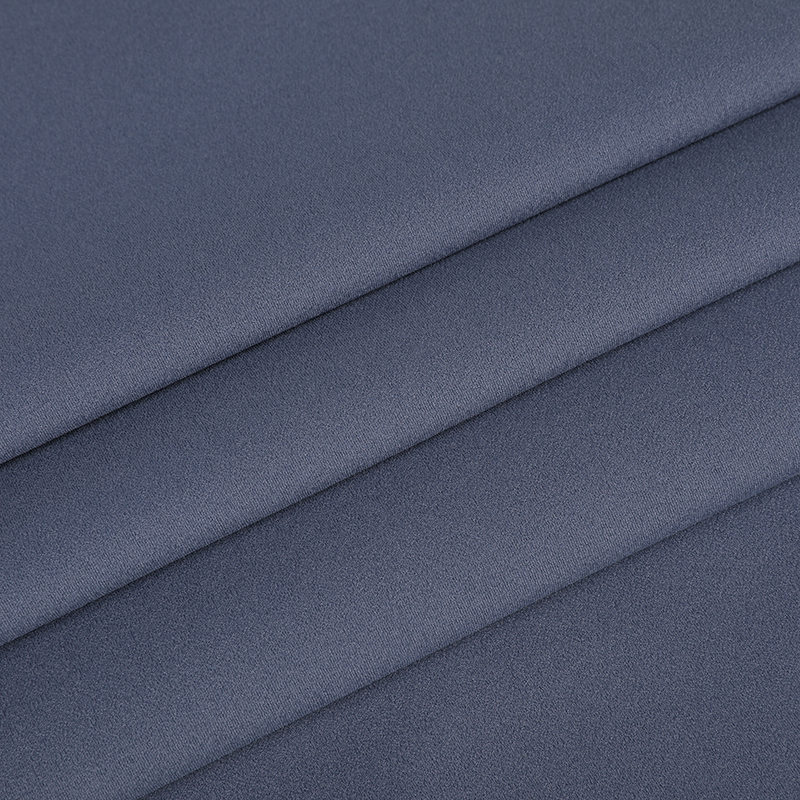
Double fabric, known in knitting terminology as interlock or double knit, is produced on a circular knitting machine fitted with two sets of needles arranged opposite one another. Single jersey has a visible face and a visible back with different loop textures. A double knit, by contrast, forms a fabric in which both sides carry a similar flat surface. That symmetry is the reason the construction is favored for garments worn close to the body for long periods.
The knitting sequence explains many of the properties that buyers ask about:
- The two needle beds form loops in alternating positions, so each loop on one side is locked to a loop on the other side.
- Yarn passes through both beds in a continuous cycle, creating a dense structure that resists stretching in the width direction.
- The knitted fabric is relaxed and heat set, which stabilizes the loops and reduces the tendency of the edges to curl.
- Finishing steps such as dyeing, heat setting, and surface treatment then determine the final hand feel and appearance.
For yoga wear, the practical benefits are straightforward. A fabric that does not curl at the hem is easier to cut and sew with clean edges. A fabric without a rough reverse side can be used for waistbands, panels, and bra linings without an additional lining layer. Because both faces are similar, designers can choose either side as the outer or inner surface, which simplifies pattern layout and reduces cutting waste.
The diagram below shows the logic of the cross-section. Both outer faces are formed from the same yarn system, while the middle layer carries much of the stretch and dimensional stability.
One limitation deserves mention. Double knit is heavier than single jersey at the same fiber content because it contains two layers of loops. That weight adds opacity and support in leggings, but it can feel heavy in lightweight tops. Weight selection should therefore follow the garment category rather than a single default specification.
Fiber Roles: What Nylon, Polyester, and Elastane Each Contribute
A three-fiber blend works because each component covers a weakness of the others. Nylon is strong, abrasion resistant, and provides a smooth, slightly cool feel. Polyester absorbs less moisture, holds its dimensions through washing, and is generally more economical. Elastane supplies recovery, the ability to return to the original shape after stretching. No single fiber performs well alone in every category, so the proportions chosen by the mill determine the final balance.
| Fiber | Main contribution | Typical share in yoga-grade blends | Points to watch |
|---|---|---|---|
| Nylon | Abrasion resistance, soft hand, cool surface | Majority share, often 55 to 70 percent | Can lose some strength with prolonged heat exposure |
| Polyester | Dimensional stability, cost control, faster drying | Supporting share, often 15 to 30 percent | Lower moisture comfort when used alone |
| Elastane | Stretch and recovery | Smaller share, often 8 to 15 percent | Sensitive to high heat and chlorine during finishing |
These shares are a starting point rather than a fixed rule. A higher elastane content increases compression and recovery but raises cost and can make the fabric more sensitive during dyeing. A higher nylon share improves softness and abrasion resistance but increases the price. Mills often adjust these numbers to reach a target hand feel at a given landed cost, so the most useful request from a buyer is a measurable performance outcome, such as recovery at a specified stretch level, together with the composition range the mill proposes to meet it.
Fiber percentages are also measured on a fiber content basis, and production tolerances of a few points are normal. A specification that lists 12 percent elastane should therefore be read as a target within an agreed tolerance window rather than an exact figure.
Reading a Specification Sheet Line by Line
A specification sheet for double fabric contains a small set of numbers that carry most of the buying decision. Reading them in context prevents costly misunderstandings, especially when a pre-production sample arrives with a feel that differs from what was approved on paper.
220 to 280Common GSM range for leggings-grade double knit
150 to 160Typical usable width in centimeters
90 percentFrequently requested minimum stretch recovery
5 percentCommon ceiling for shrinkage after washing
Weight in GSM
Weight is expressed in grams per square meter. Within the typical range, lighter fabric near 220 gsm suits fitted tops and layering pieces, while heavier fabric approaching 280 gsm provides more opacity and compression for full-length leggings. The number alone does not describe feel, because two fabrics at the same weight can differ considerably depending on yarn count and finishing.
Usable width
Width affects cutting efficiency. A wider usable width reduces the number of seams required for a garment panel and improves marker utilization. Buyers should confirm whether width is quoted as open width or tubular, since the two measurements lead to different cutting plans.
Stretch and recovery
Stretch is the extension a fabric achieves under a defined force, while recovery describes how closely it returns to its original length. A high-performing yoga fabric should stretch in both directions and recover within a narrow margin after repeated cycles. Ask the supplier for the test method and the number of cycles, because results differ significantly between a single pull and sustained cycling.
Shrinkage
Shrinkage after laundering is one of the most common sources of disagreement between brands and suppliers. Request the washing procedure and drying condition along with the result, and confirm whether the figure applies to length, width, or both. A fabric that shrinks five percent in length can distort a fitted waistband more than the number suggests.
Pure Nylon, Pure Polyester, or a Three-Fiber Blend
Sourcing teams often ask why a supplier would choose a three-fiber construction instead of a simpler one. The answer depends on the hand feel, cost, and performance target of the garment. Each option has a predictable profile, and the trade-offs can be evaluated before any sampling begins.
- Pure nylon double knit offers a very soft hand and cool surface, but it tends to cost more and can feel slippery during cutting and sewing, which affects seam placement.
- Pure polyester double knit is economical and dimensionally stable, although many buyers find its hand drier and less comfortable for close-to-skin wear.
- A nylon, polyester, and elastane blend sits between these positions, offering a balance of softness, stability, and recovery at a cost most private label programs can sustain.
For brands sourcing a double knit yoga fabric for leggings and sports bras, the blend is often the working compromise. It keeps the abrasion resistance and smoothness associated with nylon while using polyester to control cost and maintain shape. Elastane provides the recovery needed for compression without requiring a very high stretch content that would raise the price.
A useful test: if the garment must hold its compression through a full training session and survive frequent laundering, a blend usually delivers better value than either pure option.
No blend is universally superior. A pure nylon construction may still be preferred for premium lines where hand feel is the main selling point, and a higher polyester share may suit commercial programs with strict cost ceilings. The right choice depends on the target price, the expected wear pattern, and how much hand-feel variation the buyer is willing to accept.
Finishing Options and How They Change Hand Feel
Finishing is where the same greige fabric can become several different products. Dyeing, heat setting, and surface treatments alter how the fabric feels, how it drapes, and how it responds to sweat. Buyers who request a finish by name should also request a reference swatch, since descriptive words such as soft or smooth are interpreted differently across markets.
Matte and bare-touch finishes
A matte finish reduces surface sheen and gives a natural, understated appearance. Bare-touch treatments aim for a light, almost unnoticeable contact with the skin and are often requested for premium athleisure. Both finishes require careful heat control during setting, since excessive heat can stiffen the hand.
Brushed and peached surfaces
Brushing lifts fine fibers from the surface, producing a soft and slightly fuzzy touch. It increases perceived warmth and comfort, but it can reduce pilling resistance in high-friction areas. Brushing depth should therefore be specified for the garment zones where it will be used.
Functional treatments
Moisture management and cool-touch treatments can be applied during finishing. These are performance claims that require testing, so buyers should ask for the test method and the number of wash cycles the effect is expected to survive.
- A reference swatch or photo, with the target hand described in measurable terms such as thickness and stretch behavior.
- Whether the finish applies to one face or both faces of the fabric.
- The expected durability after repeated laundering.
- Any effect on colorfastness or dimensional stability.
Testing Protocols Worth Requesting Before Bulk Production
Testing is the stage where specification becomes evidence. A supplier who can share results from recognized methods, and who is willing to test against a brand's own criteria, usually reduces the risk of rejected shipments. The table below lists the checks most often requested for yoga-grade double fabric, with a common target range that buyers can use as a starting point.
| Test | What it reveals | Common target |
|---|---|---|
| Colorfastness to washing | Color loss and staining after laundering | Grade 4 or higher |
| Colorfastness to rubbing | Dye transfer from friction, dry and wet | Grade 4 dry, grade 3 to 4 wet |
| Colorfastness to perspiration | Color change when exposed to sweat | Grade 4 or higher |
| Dimensional change after washing | Shrinkage in length and width | 5 percent or less |
| Stretch recovery | Ability to return to original shape | 90 percent or more |
| Pilling resistance | Surface fuzz formed under repeated rubbing | Grade 3 to 4 or higher |
Results must always be read against the test conditions. A recovery figure obtained after a single cycle is not directly comparable with one obtained after fifty cycles, and a gentle wash cycle will not predict the outcome of a hot tumble dry. Ask for the full test report rather than a summary line.
Laboratory variation also matters. When two laboratories test the same fabric, results can differ by a grade or by a few points. Agreeing in advance on which laboratory will run the final test, and which method it will use, avoids disputes at the point of inspection.
From Sample Request to Bulk Delivery
Most double fabric programs follow the same sequence, although the duration of each step depends on whether the color and construction already exist. A clear sequence helps both sides plan production capacity and avoid rushed approvals.
- Brief and specification: composition range, GSM, width, finish reference, and target order quantity.
- Lab dip and swatch: color matching against an agreed standard, usually completed within a short working window for standard shades.
- Pre-production sample: a sample run at the approved specification, used for fit, hand, and performance checks.
- Bulk run: production scheduled after the pre-production sample is approved and any test results are confirmed.
Lead time varies with the complexity of the request. Standard colors on an existing construction move faster than a new composition or a custom finish that requires development. Buyers who share a complete brief at the start typically avoid the most common delay, which is repeated revision of a specification that was never fully defined.
Minimum order quantities also shape the timeline. Small color runs may be possible for sampling, but bulk orders are normally scheduled in full production lots, so it is worth confirming the lot size before committing to a seasonal drop.
Matching the Fabric to the Way People Train
The same blend can perform differently depending on how the garment is worn. A slow studio class, a hot room session, and a high-intensity training block place very different demands on fabric, so the specification should follow the activity rather than a generic standard.
Studio yoga and low-impact movement
For slower practice, the priorities are softness, drape, and freedom of movement. A lighter weight in the lower part of the common range, with moderate recovery, is often sufficient. Surface finish matters more here than in high-impact wear, because garments are worn in close contact for long periods.
Hot yoga and high-sweat sessions
Heat and perspiration change how fabric feels and how it holds its shape. Specify moisture transport, quick drying behavior, and a perspiration colorfastness target. A polyester share that is not too low helps the fabric dry faster, while a nylon share that is not too high keeps the surface comfortable against wet skin.
Power training and compression garments
Higher recovery and heavier weight support compression and reduce fabric movement under load. This category benefits most from a nylon polyester spandex fabric construction, because the blend allows enough elastane for support without making the surface harsh. Confirm seam strength and stretch behavior on the actual garment pattern, since fabric data alone does not guarantee garment performance.
A Sourcing Checklist for Brand Teams
A structured checklist makes supplier comparisons more objective. The points below can be shared with any mill during the initial inquiry and used to compare responses on equal terms.
- Request the fiber composition as percentage ranges with stated tolerances.
- Confirm GSM, usable width, and whether the width is open or tubular.
- Ask for stretch and recovery figures together with the test method and number of cycles.
- Request colorfastness and shrinkage results from a named laboratory or method.
- Agree on a reference swatch and a measurable description of the target hand feel.
- Clarify sample lead time, minimum order quantity by color, and bulk production scheduling.
Suppliers who answer these points with specific figures and clear test references are generally easier to work with than those who respond with general claims. The purpose of the checklist is not to set a higher bar than necessary, but to make sure both sides are measuring the same thing.
Frequently Asked Questions
Q1: Is ammonia fabric the same as spandex fabric?
In practice, yes. Both terms describe the same elastic fiber family. Ammonia is a direct translation used in some older or regional catalogs, while spandex and elastane are the standard English terms. Confirm the percentage in the composition line so the meaning is unambiguous.
Q2: What GSM is best for yoga leggings?
Many leggings programs use fabric between about 220 and 280 gsm. Lighter weights suit fitted tops and layering, while heavier weights provide more opacity and compression for full-length bottoms. The right choice depends on the garment category and the level of support required.
Q3: Why choose a nylon polyester blend over pure nylon?
The blend balances softness, abrasion resistance, dimensional stability, and cost. Pure nylon feels softer but costs more and can be slippery to cut. Pure polyester is economical but often feels drier against the skin.
Q4: How long does sampling usually take?
Sampling time depends on whether the color and construction already exist. Standard shades on an established construction move faster than a new composition or a custom finish. A complete brief at the start is the most reliable way to shorten the process.
Q5: What should be checked before approving a bulk order?
Review composition, GSM, width, shrinkage, colorfastness, and stretch recovery results against the approved specification. Confirm that the pre-production sample matches the reference swatch under the lighting and handling conditions you plan to use.
Q6: Can double fabric perform well in hot yoga?
It can, provided the blend includes enough polyester for fast drying and the finish does not trap moisture. Specify perspiration colorfastness and moisture management requirements, and ask for test results rather than relying on general claims.
CONTACT US
If you need a quote or have any questions, you can fill out the following form to contact us.

ABOUT
PRODUCT
CONTACT US
-
 West 3rd Floor, Building 5, Zone A, Hangpai Garment Industrial Park, Changan Town, Haining City, Jiaxing City, Zhejiang Province
-
 +886978217318
-
 [email protected]/[email protected]
Copyright © Haining Junrui Textile Co., Ltd. All Rights Reserved.
