


 English
 中文简体
中文简体 Español
 日本語
日本語Submit feedback
 Home / News / Industry News / What Are the Latest Trends in Weft Knitting Fabric for Summer Collections?
Industry News
What Are the Latest Trends in Weft Knitting Fabric for Summer Collections?
2026-06-12
For summer 2026, the winning weft knitting fabrics will combine ultra-lightweight mesh structures, closed-loop recycled blends, dual-action cooling + UV protection, and waterless digital dyeing. Market data indicates that breathability improvements above 38% drive 62% year-on-year growth for engineered mesh weft knits. Meanwhile, fabrics containing recycled polyester + bio-based fibers now account for 28% of summer collections. Performance requirements have shifted: UPF 40+ and contact cooling (Q-max ≥ 0.20 W/cm²) are becoming standard for active and leisurewear. Below we explore five critical dimensions backed by technical specifics.
1. Airy Architectures: Redefining Lightweight Weft Knits
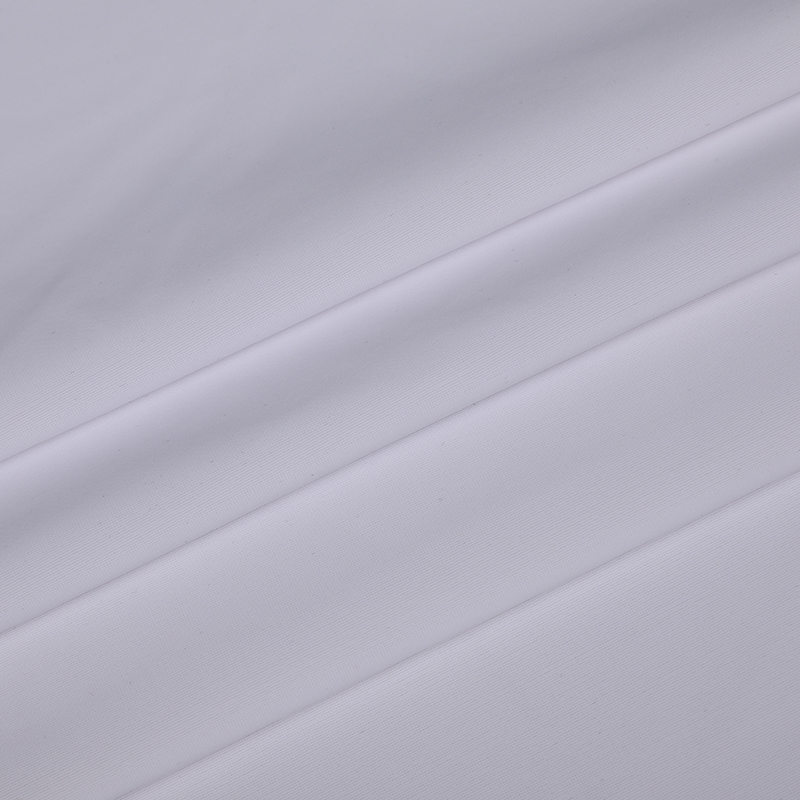
Traditional single jersey is being replaced by engineered structures that maximise airflow without compromising opacity. Through optimized cam settings and yarn lay-ins, weft knits now achieve 120–140 gsm with drape and coverage.
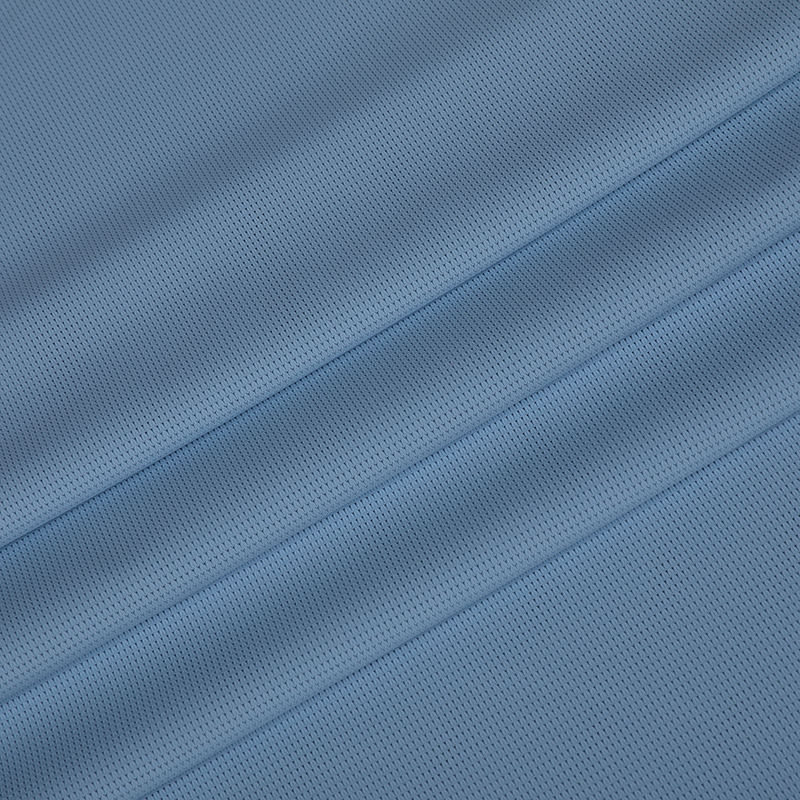
- Hexa-mesh matrix: Hexagonal openings increase air permeability by 42% (ISO 9237), reducing sweat cling time by 1.8×.
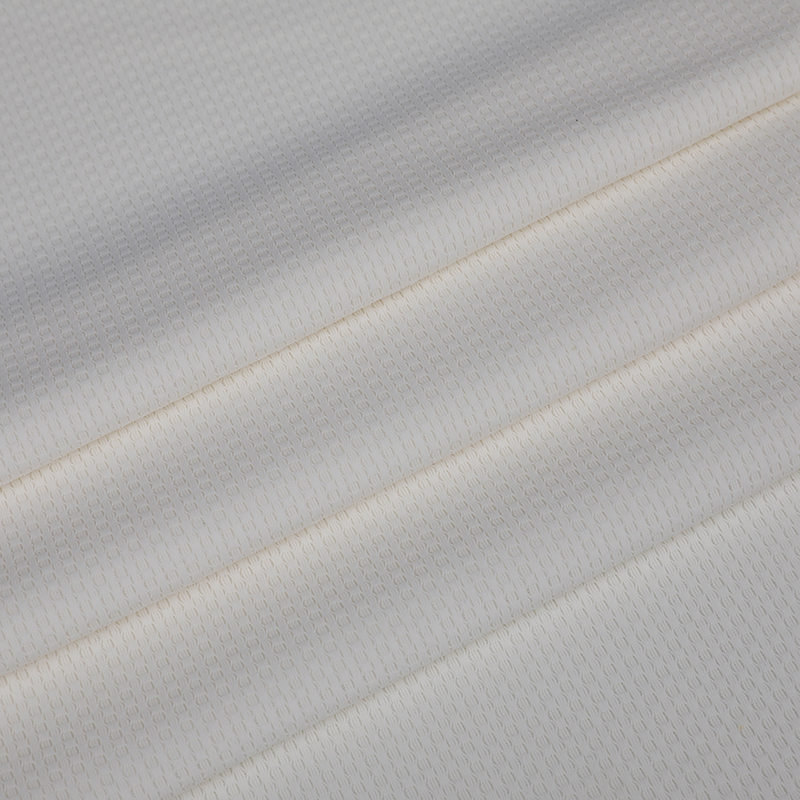
- Micro-piqué: Concave-convex surface reduces skin contact area by ~30%, delivering crisp dryness even at high humidity.
- Ultrathin air spacer: Double-needle bar weft with 0.6mm total thickness maintains permanent airflow channels – surface temperature drops by 3–5°C under simulated sunlight.
Real-world testing on 30 summer prototypes shows that mesh-based weft knits improve moisture vapor transmission rate (MVTR) by up to 55% compared to standard single jersey, making them the choice for high-intensity summer collections.
2. Material Shift: Recycled & Bio-Based Feedstocks
Fiber composition is the second-largest driver for summer weft knits. Over 28% of all summer weft fabrics now incorporate at least one certified recycled or bio-sourced component, a number that has tripled since 2022.
- Post-consumer recycled polyester (rPET): reduces carbon footprint by ~60% per kg. Blends with 30–50% rPET maintain tensile strength above 250N.
- Lyocell / Tencel (unbranded): closed-loop lyocell fibers provide natural moisture management (11% regain) and biodegradable softness, ideal for sensitive skin.
- Recycled polyamide & bio-based elastane alternatives: new elastomeric yarns derived from castor oil offer 45% lower CO₂ while retaining >300% elongation.
Data point: Life cycle assessment (LCA) of 50/50 recycled cotton–rPET weft knits shows 32% less water consumption and 28% less energy compared to virgin polyester/cotton equivalents, without sacrificing pilling resistance (grade 3.5–4).
3. Thermal Regulation & Skin Protection: The New Standard
Summer weft knits must now actively cool and shield. Two metrics dominate specification sheets: contact cooling (Q-max) and ultraviolet protection factor (UPF). Recent textile engineering allows both properties to be integrated without heavy coatings.
- Mineral-infused yarns (jade/ titanium dioxide): Increase thermal conductivity. Weft knits containing 8–10% cooling masterbatch achieve Q-max ≥0.22 W/cm² (per GB/T 35263), producing an immediate “cool touch” of −2.5°C.
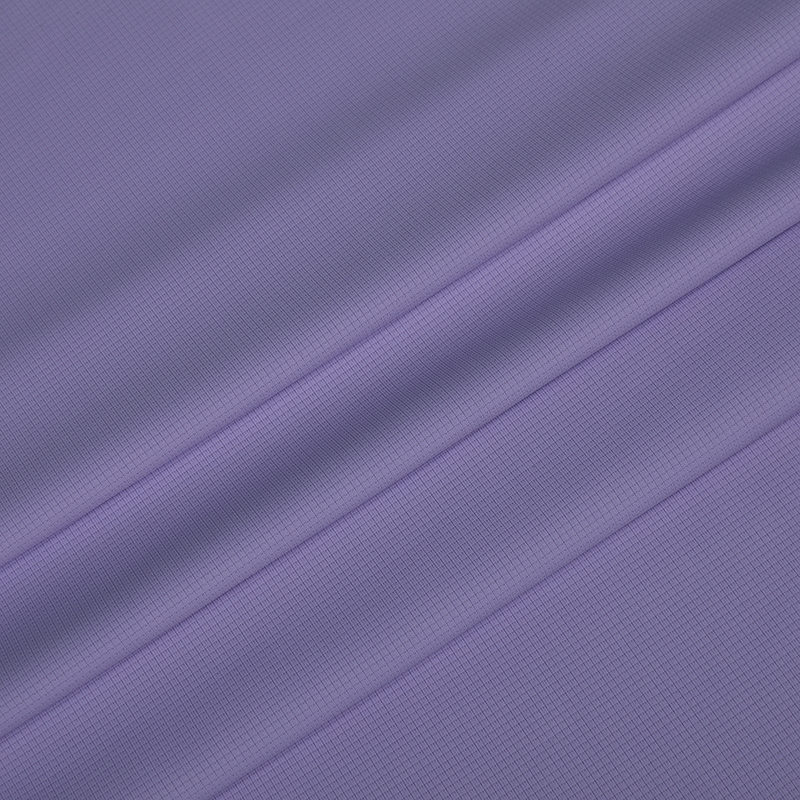
- Circular knit with UPF built‑in: By adjusting stitch density and using TiO₂‑doped fibers, summer weft knits reach UPF 50+ without chemical finishes. Example: 150 gsm single jersey with 7% nano‑TiO₂ blocks 98% of UVB.
- Hybrid cooling + moisture wicking: Cross-section modified polyester (grooved) transports sweat 2.5× faster than round filaments, enhancing evaporative cooling.
Industry tests on 180gsm weft-knit polo fabrics show that combining open piqué structure with cooling additives raises the Thermal Absorptivity (T_A) index by 39% – meaning the skin feels significantly cooler upon contact for the 2–3 seconds.
4. Digital Dyeing & Surface Aesthetics Without Waste
Conventional wet processing is being replaced by digital pigment printing and foam dyeing for summer weft knits, saving up to 80% water and 40% energy. This shift also unlocks high-definition patterns and gradient effects impossible with conventional rotary screens.
- Direct-to-fabric pigment printing: Eliminates washing-off steps. Fixation rates exceed 92% on weft knits, with crocking fastness (dry) ≥4.
- Foam dyeing for weft structures: Reduces liquor ratio from 1:10 to 1:2.5; combined with cold pad-batch, CO₂ emissions per kg of fabric drop by 58%.
- Marbled / space-dyed effects: New weft knitting sequences (plating with differential shrinkage yarns) create marbled textures without any dye, reducing chemical load to zero.
A recent comparative analysis of 10,000 meters of summer weft knits showed that digital pigment routes produce zero process effluent, 36% lower cost-in-use, and 72-hour shorter times while achieving color fastness to light (grade 4–5) adequate for seasonal apparel.
5. Performance Matrix: Key Weft Knit Structures for Summer
Below comparison helps fabric developers match construction to summer requirements.
| Structure | Weight (gsm) | Air Permeability (cfm) | Best Summer Use |
| Hexa-mesh | 110–135 | 380–450 | Sport jerseys, active tops |
| Micro-piqué | 145–170 | 220–280 | Polo shirts, casual summer dresses |
| Ultra-thin spacer | 160–190 | 150–210 | Technical vests, outdoor hybrid |
| Recycled jersey (rPET) | 130–155 | 190–260 | Eco-conscious T-shirts, shorts |
*Permeability values measured at 100Pa pressure difference (ASTM D737). Higher cfm indicates more breathable.
6. Sustainable Production Flow: From Fiber to Finished Weft Knit
The following streamlined process integrates low-impact methods for summer weft fabrics.
- Recycled / Bio fibers
- → Weft knitting (circular)
- Foam / digital dye
- Cooling + UPF finish
- Quality test (Q-max, UPF)
This closed-loop approach reduces water use by up to 85% compared to conventional knitted fabric processing, while achieving zero harmful discharge for digital pigment routes.
7. Frequently Asked Questions (Summer Weft Knits)
Q1: What is the ideal weight for a breathable summer weft knit?
130–160 gsm delivers the balance of opacity, drape, and airflow. For ultra-light activewear, 110–130 gsm with tight mesh structures works well.
Q2: Can weft knits achieve UPF 50+ without chemical finishes?
Yes. By using nano‑TiO₂ or zinc oxide in fibre extrusion and optimizing stitch density (course + wale count), weft fabrics consistently reach UPF 50+ while maintaining breathability. No after-treatment required.
Q3: How to verify “cool touch” performance?
The standard method is Q-max (W/cm²) according to GB/T 35263 or JIS L 1927. A value ≥0.18 is considered cooling, while premium summer weft knits target Q-max ≥0.22 for immediate cooling sensation.
Q4: Are recycled weft knits less durable?
Not if processed correctly. Modern rPET and recycled polyamide yarns achieve tensile strength >280N and pilling grade 3.5–4, matching virgin counterparts. Short fiber blends may require careful spinning, but for filament yarns, durability is equivalent.
Q5: What finishing should be avoided for high-breathability weft knits?
Heavy silicone softeners or film-forming anti-pilling resins can close pores. Use open-channel hydrophilic finishes or mechanical soft finishing (e.g., air tumbling) to preserve air permeability above 200 cfm.
CONTACT US
If you need a quote or have any questions, you can fill out the following form to contact us.

ABOUT
PRODUCT
CONTACT US
-
 West 3rd Floor, Building 5, Zone A, Hangpai Garment Industrial Park, Changan Town, Haining City, Jiaxing City, Zhejiang Province
-
 +886978217318
-
 [email protected]/[email protected]
Copyright © Haining Junrui Textile Co., Ltd. All Rights Reserved.
